Mostrando postagens com marcador game. Mostrar todas as postagens

quarta-feira, 4 de março de 2026

From game to the big screen: the minimalist horror of Iron Lung

Last year, I had the privilege of presenting my research on the indie Iron Lung at the Video Game Cultures conference in Prague. It was an incredible opportunity to discuss how creative constraints can redefine digital dread with scholars from around the world. I am now thrilled to share that this research has been expanded and transformed into a full book chapter, set to be published very soon, providing a deeper academic dive into how minimalism can maximize psychological horror.

While adapting the original conference paper into this upcoming book chapter, I saw a unique opportunity to expand the analysis by including the recently announced Iron Lung film adaptation. Observing how this indie narrative is transitioning to the cinema not only enriched the academic text but also served as the primary inspiration for this blog post. It is awesome to see how a project rooted in extreme digital minimalism is now evolving to challenge audiences in a completely different medium.

Check the content below!

• • •   

Minimalism, dread, and the leap to cinema

The timing of this publication couldn't be more appropriate. This month, David Szymanski’s oppressive masterpiece makes its debut in theaters, marking a significant milestone where indie game narratives occupy diverse media spaces. Iron Lung (2022) is a masterclass in what I term "horror ludens"—a playful yet terrifying engagement with fear that thrives not on high-fidelity graphics, but on the power of restraint.


The game’s transition to film underscores a core argument of my study: that the most unsettling stories are those that leave the most to the imagination. In the game, players are confined to a rusted submarine in an ocean of blood, forced to navigate using only a grainy, low-fidelity camera and rudimentary sonar. This "meta-diegetic" interface—where in-world tools are the only source of information—forces the player to become a co-author of their own terror. As Iacovides et al. (2015) suggest, removing traditional non-diegetic overlays (like HUDs) prevents immersion breaks, making the character's struggle identical to the player's cognitive labor.


Whether in the cockpit of a virtual sub or a seat in a dark theater, Iron Lung leverages "cosmic dread" by restricting sensory input. This forces our minds to fill the vast visual gaps with personalized forms of terror. As the film brings this desolate, blood-submerged moon to a wider audience, it continues to prove that in horror design, "less is more". By subjecting ourselves to these "unnecessary obstacles," we find a unique ludic pleasure in navigating existential despair.


References:

Iacovides, Ioanna, Jon Cox, Richard Kennedy, Paul Cairns, and Charlene Jennett. 2015. “Removing the HUD: The Impact of Non-diegetic Game Elements and Expertise on Player Involvement.” In Proceedings of the 2015 Annual Symposium on Computer-Human Interaction in Play, 13–22. London: ACM.

Mastrocola, Vicente Martin. 2014. Horror Ludens: Medo entretenimento e consumo em narrativas de videogames. São Paulo: Livrus.

Suits, Bernard. 2005. The Grasshopper: Games, Life and Utopia. Toronto: Broadview Encore Editions.


#GoGamers

segunda-feira, 17 de novembro de 2025

To think about game design process

An excellent point of view about game design by Anton Slashcev. Click here to check the original post.


#GoGamers

terça-feira, 9 de agosto de 2022

UX writing for games

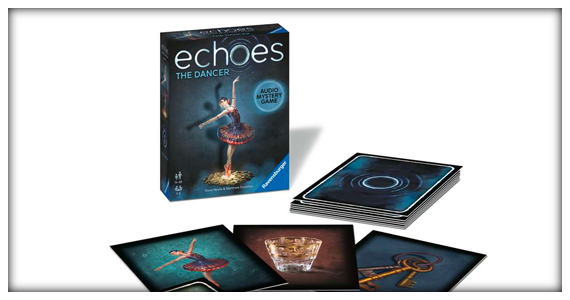
One of the last acquisitions to my gaming collection was the card game “The Dancer”, one of the titles from Echoes’ series. Basically, the game is an audio-based experience that uses cards and a smartphone app to scan the images in the deck, showing dialogues, sounds, and music to the players.


“The Dancer” narrates a mysterious case that mixes supernatural forces and a murder?. It is a co-op game where all the players must listen to the sounding hints to put the cards in order to solve the case. The app system is very clever and interesting; it requires extreme attention to details and all the solutions are easily shown using the smartphone.

A very interesting feature of “The Dancer” is the UX writing strategy behind the narrative. UX writing, like designing and coding for UX, is a design and engineering process; it is an iterative process of creation and evaluation that uses texts to improve an experience (PODMAJERSKY, p.30, 2019).

In the case of a card game with a sound app, the game designing team must search for a strategic connection between the images scattered in the table and the text players will listen to during the experience. It is a fundamental thing to build the storyline using the best words to create a sense in the game.

Other point to highlight in the case of a complementary app: the UX text patterns in digital platforms like titles, buttons, descriptions, labels, controls, text input fields, transition texts, confirmation/error messages, and notifications must be planned to create an easy access to the narrative (PODMAJERSKY, p.67, 2019).

In a synthetic way: the cards are physical items that allow players to interact collaboratively in a physical space, but the true immersive experience comes from the materialized text in audio format (where the UX writing strategy is built).

I want to try the other games from the Echoes’ series.


Reference:

PODMAJERSKY, Torrey. Strategic writing for UX: drive engagement, conversion, and retention with every word. Sebastopol: O'Reilly Media, 2019.

sexta-feira, 15 de julho de 2022

An ancient D30

I found this strange artifact in the Real Ontario Museum in Toronto (Canada). It is an asian 30 faced dice. There is no more information about it, but it is an authentic piece of ludic archeology. =)


#GoGamers

sábado, 6 de novembro de 2021

Indie game of the month: STILSTAND

I’m always searching for strange indie games and, yesterday, I found this small treasure: STILSTAND. Well, in fact it’s not a game per se; it’s a kind of a dark, whimsical, and absurd interactive comic created by artist Ida Hartmann, exploring the despair and loneliness of a young woman living alone through a long summer in Copenhagen. You can check the trailer below:


The plot is simple, but the narrative is immersive and full of current issues from contemporary society. Amid the desire for isolation, there’s still a hope that one day, things will change for the main character. To reach this, she will receive some help from a bizarre shadow monster that lives in her apartment.

STILSTAND is a personal and hand-drawn tale about the high expectations and the fragile limbo of feeling stuck in life. It is a whimsical and absurd portrayal of anxiety, loneliness, and despair, and brings the player along on an adventure into the emotional landscape of a lost soul.

Stilstand

As I mentioned, it’s more a visual novel with a comic book layout structure. Most of the time you only click on the screen to move forward the dialogues/situations. Sometimes, there are few small puzzles very easy to decipher – but this is not the core of the game. STILSTAND is one experience to enjoy slowly and think about the crazy times we are living in.

Thirty-seven years ago, when I got my first video game (Atari), games were only about monsters, shootings, car racings, puzzles etc. Little Vince, at that time, never thought that, one day, he would play games with themes like depression, suicide, dementia etc. As I always say: games are media and part of contemporary culture. Games are mediums of expression and powerful platforms to send serious messages, too.

Thanks to the indie gaming industry for bringing us an exotic experience like this one. Not only an experience of entertainment, but a product that brings us to reflect about some common problems around us.


•Platforms: iOS, PlayStation 4, Android, Microsoft Windows, macOS, Nintendo Switch, Macintosh operating systems 

 #GoGamers

domingo, 4 de abril de 2021

SPACE TRAIN: a geme about blockchain

Is blockchain a level hard subject? Yeah. Can we facilitate the understanding of this subject in a playful way? Of course we can!

Meet SPACE TRAIN: a full online browser based game that explains some basic ideas of this complex theme.


To understand the complex idea behind the blockchain concept, the game uses a metaphor with aliens being allocated to a spaceship in limited turns. The game was developed by students and teachers at the college where I work (I created the game design). In the future there will be a website with supporting material, but - for now - you can play the game by clicking here.


Enjoy the game and wait for more content.

#GoGamers

sexta-feira, 1 de novembro de 2019

TAP THE TAP: an advergame to promote a Brazilian brewhouse

This site is a platform to discuss gaming concept ideas, but it’s also a place where I can show a little bit of my game designing work. In this post, I want to present a game that I developed for Let’s Beer – a Brazilian brewhouse located in São Paulo.

TAP THE TAP is an advergame; in other words: a game to promote a brand, a product or a service. A ludic project with advertising purposes. TAP THE TAP is a hyper-casual game with simple mechanics where you must tap the beer taps to match the same order from the clients at the bar. As the game advances, you must be faster to deliver the beers or you can lose a life. Let’s Beer brewhouse used the game to give its customers discounts based on points, engaging them to a branding experience and promoting a new bitter ale produced by the company. Click here to play the game.


TAP THE TAP is a very fast experience created with HTML 5 programming. The game does not require any plugins and players can open it directly on the browser (desktop or mobile). The game is an attempt to promote de brewhouse and to establish a new dialogue with customers that can share the game with friends in a viral way.


One more produced. One more to use as an example in classes and for the portfolio.

#GoGamers

sexta-feira, 4 de outubro de 2019

Ten ideas from Reiner Knizia about playtesting

Reiner Knizia is one of the biggest names in game design around the world. The German game designer is a mathematician and has his name associated to more than 700 games launched in many different countries. I had the honor to talk personally to Knizia in 2011, at DIGRA’s conference in Hilversun (Netherlands) and I watched a great keynote about the game designing process in the same event.


On that occasion, I gave Knizia my board game, YN, and had the opportunity to talk a little bit with him (a great achievement for my game designer career).


I follow Knizia in social media and I’m always taking notes about the knowledge on game design he shares on those platforms. In this post, I will reproduce 10 ideas Knizia showed recently on Twitter about playtesting (one of the most fundamental topics in the game designing process). Below, I listed the 10 points. Follow him by clicking here.

Playtesting 1. Those who do not play do not live. Those who do not playtest do not design.

Playtesting 2. Designs always work perfectly in your mind. The first playtest is the (often cruel) moment of truth.

Playtesting 3. Regardless of how much experience you have, you cannot develop a game on the drawing board – only at the playing table.

Playtesting 4. Game design is a classic iterative process of playing and improving – nowadays popularised as “design thinking”.

Playtesting 5. When your playtesters do not like your design, (usually) your design is to blame – not your playtesters.

Playtesting 6. I recognise good playtesters by my (frequent) urge to strangle them.

Playtesting 7. For your design to appeal to one group, test with one group. For your design to have broad appeal, test with many groups.

Playtesting 8. You can make (most) designs interesting through your play-talk - but when published, your design needs to speak for itself.

Playtesting 9. Blind playtesting, without you taking part, is as useful as other people going on a rollercoaster and reporting their experience.

Playtesting 10. When you have playtested your design to perfection, let it rest some time, then play again. – Expect to be surprised!

#GoGamers

segunda-feira, 11 de dezembro de 2017

MIND ALONE: an experimental mobile game

1.Introduction

Mind Alone (2017/2018) is an experimental mobile game that I created in a partnership with Sioux, a Brazilian gaming publisher (it'll be launched in February). The main mechanics is puzzle-based (ADAMS, 2014) and most part of the gaming interface is built using alphabetical characters, only. Narrative is the main feature in this case and puzzle mechanics create the perfect blend for the gameplay. The main idea of the game is to follow the notion that “story, dialogue, character profiles, etc., should all be created in a way that add to the design of the gameplay” (INCE, 2006, p.36).


Based with slight modifications on the “High Concept Document” proposed by Adams and Rollings (2009, p.63), in this brief paper we aim to discuss some main features from Mind Alone’s game designing process, its business model conception, and how an experimental mobile game can be used to promote a gaming studio and become an example for game designing classes.

It is important to highlight that the “High Concept Document” (HCD) is an interesting exercise of “elevator pitch”; in other words: the document must be brief, objective, take no more than 10 minutes to read, and contain the essential features from the game. This kind of document is a good tool for game designers to register ideas for further consulting, and to explain ideas to studios/publishers/gaming companies.

Below we present the main features from Mind Alone described in the HCD format.

2.Mind Alone’s High Concept Document

Name of the game: Mind Alone
Team: Vicente Martin Mastrocola (game design, sound design, information architecture); Gabriel Romano (user experience, Unity programming); Guilherme Camargo (business model; planning strategy).
Publisher: Sioux
Country and year: Brazil (São Paulo), 2017/2018

Game summary: Mind Alone is a non-competitive single-player game based on plot/story-related. The player embodies the role of a character trapped in his own mind. It is impossible to say if they are dreaming, lying in a coma or dead. To reach the answer for this mystery, the player must solve a series of puzzles; each puzzle is a memory that brings hints of what happened. The memories start in the character’s childhood and advance until actual days. The player must solve all the puzzles to reach the surface of the conscience. Mind Alone is an authorial game and does not demand special licenses.

Gaming references: The Witness (Thekla Inc., 2016); Dark Room (Doublespeak Games, 2013); Lifeline (Three Minute Games, 2016). Games with a focus in narrative features and a clear invitation to players become “co-creators” of the plot.

Player’s motivation: the character needs help to wake up from the prison of their mind, in which they are confined in an infinite loop of disconnected memories. Players must solve the puzzles, which have different difficulty levels, to reach the surface of conscience.

Keywords: puzzle game; mystery; terror; enigma; mobile, transmedia; immersive; narrative

Target audience: 16+ year-old players, fans of puzzle/enigmas, escape the room games, and horror/terror literature.

Highlights: game 95% created using only alphabetical characters with interesting artistic interface. Freeware. Some puzzles offer transmediatic features inviting players to explore blogs and sites. Fast. Dual language: Portuguese and English.

Platform: mobile game developed for iOS and Android systems (created with Unity programming).

Game designing goals: through dark/mysterious narrative and puzzle-based gameplay, offers the players an experience of immersion, fear and tension. Generates thought-provoking puzzles with a simple interface.

Music and sound design: dark ambient soundtrack with incidental sounds (doors opening, moans, screams, piano notes, etc.). Some sounding references come from projects like Lustmord, Robert Rich and Zoät·Aon.

Business model: freeware. The goal of the game is to participate in game designing contests, festivals and gaming fairs to promote Sioux studio. As a freeware game, another goal is to use Mind Alone in game designing classes.

Mechanics examples: Mind Alone uses various smartphone features to constitute its gameplay. There are puzzles that use touch screen, assembly of elements, movement of the device (through accelerometer and gyroscope) and puzzles with textual responses. Below, we can analyze some puzzle wireframes with mechanics:

Puzzle example 1:

Solution: turn the smartphone to 90o to move the words from the shelf to the ground.

Puzzle example 2:

Solution: touch the dots in order to create a star pattern. If the player does not touch in the right sequence, the lines will disappear.

Puzzle example 3:

Solution: the player must search and touch the word “ON” in the middle of the characters. The screen will become white and the next puzzle will appear.

Puzzle example 4:

Solution: this puzzle is a transmedia enigma; the answer is outside of the game. Players must access the URL https://imoldforthis.blogspot.com.br/ to verify the image of some trees and type the answer in the blank field.

3.Final thoughts

Despite being a free mobile game, Mind Alone is one important tool for Sioux studio to present its work and participate in game designing contests and gaming fairs. The game is also a case to be used in the classroom and to discuss how to create independent experimental/artistic games, and to digress on how the gaming industry is plural in this sense. The strategy of distributing a free game could guarantee other profits like posts in specialized gaming websites, discussions in academic articles, and prizes in gaming contests etc.

Following the thoughts of Fullerton et al. (2008, p.15-16), Mind Alone used one very synthetic game design process based on stages: 1) conceptual stage: to define the game’s theme; 2) brainstorm stage: to think how the theme will materialize on the gaming interface; 3) Physical prototype/pre-prototype stage: to create a fast pre-visualization of the game using paper, pen and simple components; 4) Layout stage: to establish the initial concepts of the interface; 5) Digital prototype and test stage: with the previous mechanics and first layouts, it is possible to develop a simple version to be played on browser or in smartphones. In this stage, it is possible to start the beta-testing sessions; 6) Production stage: the feedbacks from the digital prototype beta-test sessions are the main information to produce the final version of the game; 7) Evaluation stage: to make the final tests to assure it is error-free; 8) Launching stage: to put the game available for download in mobile platforms (Android and iOS). It is important to highlight that, during this whole process, the game is documented using specific files (like the “High Concept Document” discussed previously).

By discussing the creative process and the business model structuration of Mind Alone, we hope to demonstrate how strong is the relationship between players and gaming companies in the contemporary digital gaming ecosystem. We claim it is of utmost importance to use a methodological process, even for small productions. We can see the importance of working with a consistent methodology and it is possible to imagine the iterative process applied in bigger projects. We hope we can contribute to the field of gaming studies and that this paper earns future developments and inspire new relevant discussions.

The Brazilian gaming market, as an emergent market, reveals itself as a privileged ambient to observe these game design processes. We welcome the opportunity to present this relevant discussion as a means of contributing to the on-going efforts in exploring the gaming market in contemporary culture.


References:

ADAMS, Ernest. Fundamentals of puzzle and casual game design. San Francisco: Pearson, 2014.
ADAMS, Ernest; ROLLINGS, Andrew. Fundamentals of game design. New Jersey: Pearson Prentice Hall, 2009.
FULLERTON, Tracy, et al. Game design workshop: a playcentric approach to creating innovative games. Burlington: Morgan Kaufmann Publishers, 2008.
INCE, Steve. Writing for video games. London: A & C Black Publishers Limited, 2006.

domingo, 19 de novembro de 2017

Immersing deeply in gameplay through sound

From time to time, I like to replay games so I can have new points of view and (re) discover aspects and elements of game design, gameplay, narrative or creative process. Last weekend, checking my Apple Cloud to verify some old downloads, I found this very unique game: Dark Echo.


Created by RAC7 Studio the game offers an experience to “explore a mysterious world through sound”. And “sound” is the core and keyword of this game. Using only a black interface with minimal white sound waves ricocheting around the scenario, the player is invited to explore a kind of a dungeon filled with monsters. Check the gameplay:


It operates by touching the screen to walk and generate the sound waves. The important detail is the fact that the sounds of your steps will attract terrible “monsters” (again, you will only hear the creatures’ grunts) and sometimes you need to run into the darkness. Anxiety is an important game design component in this example. The whole game is based in it, and all fear/horror/terror reactions derive from it.

Sound is strategically built in this case, the perfect blend between the minimal interface and the sounding experience. This is a great example of how we can construct a game using few elements to create big impact.

#GoGamers

sexta-feira, 1 de setembro de 2017

Teaser trailer: MIND ALONE

In a partnership with SIOUX Studios from São Paulo I'll launch my new mobile game soon (end of October probably)! MIND ALONE is a text-based ludic interface. It is an experimental puzzle game that uses different functions from smartphones to create an immersive suspense/terror narrative. It is a “scape the room” game, but the room is your own mind. Each memory is a puzzle. The aim is to solve the puzzles, recover your memory, reach the surface and wake up from this mysterious nightmare.

Check the teaser trailer:


Wait for news here!

#GoGamers

domingo, 21 de maio de 2017

The Counting Kingdom: learning math could be fun

What an excellent surprise one student brought in the last “gaming analysis” class. The Counting Kingdom is an educational game for kids (6 to 8 years), that teaches basics concepts of sum and equations using a tower defense mechanics. It’s very easy: you need to cast a spell using some magic scrolls to stop the monsters. Each monster has a number of strength and the player needs to sum the scrolls to make an equal number and eliminate the enemy. Check the gameplay:


That’s a great example of how we can use a game-based learning strategy. It’s important to mention that a game like this one does not replace a math class, but it helps to complement and reinforce the studied ideas.

#GoGamers

terça-feira, 9 de maio de 2017

Article: Analyzing the creative process of mobile indie game RockFlickz

A complete article discussing in details the creative process of my last mobile game RockFlickz. Click here to download.


Send me your opinion!

#GoGamers

segunda-feira, 20 de março de 2017

Board game mechanics in a poster

I was in Santiago (Chile) last weekend for a presentation about my new mobile game RockFlickz. After the work, I visited one very interesting ludic place: Dos De Seis Board Game Café. You can rent board games, play them and drink excellent coffee. One poster in the wall caught my attention and I want to share it in this post:


Some "artist" grouped the main board game mechanics in the same space. A cool poster to decorate a wall and an excellent exercise to think about game design.

#GoGamers

quarta-feira, 22 de fevereiro de 2017

A diagram to explain connections in a board game design process

An excellent diagram to think about the relationships between theme, rules, players and components in board games. The intersections between the different areas point out very interesting ways to ponder about game design questions.


Source: Big Game Theory site

#GoGamers

segunda-feira, 16 de janeiro de 2017

Iterative design & games

Gaming creativity process, allow a myriad of methodological using possibilities. In the gaming projects that I participated, I frequently used the iterative design method. One first view about this methodological process comes from Zimmerman (2003, p.176), who says, ‘iterative design is a design methodology based on a cyclic process of prototyping, testing, analyzing, and refining a work in progress’.


Complementing the previous idea, the process of iterative design for games, can be divided into few stages (FULLERTON et al, 2008, p.249): A) conceptual phase: consists of generating ideas, formalizing and testing them; B) pre-production: here the ideas are reviewed to evolve and be tested again; C) the production stage: the game is tested and revised with different groups of play testers to locate errors; D) phase of quality assurance: where the game is tested to be launched without errors.

We'll discuss more about these subject in a future post using some examples (indie games and triple A games) to clarify this idea. Until then, check out the video below about iterative design applied to games:


#GoGamers


References:

ZIMMERMAN, Eric. Play as Research: the Iterative Design Process. IN: Design Research: Methods and Perspectives, (2003): 176-184. (also available at last access: May, 2015).

FULLERTON, Tracy et al. Game design workshop: a playcentric approach to creating innovative games. Burlington: Morgan Kaufmann, 2008.

sexta-feira, 13 de janeiro de 2017

To think about fun, play and games

"Fun is the aftermath of deliberately manipulating a familiar situation in a new way" ( BOGOST , 2016, p.57)


Source: BOGOST, Ian. Play anything: the pleasure of limits, the uses of boredom, & the secret of games. New York: Basic Books,2016.

segunda-feira, 26 de dezembro de 2016

Book: Levelling Up - The Cultural Impact of Contemporary Videogames

Wow! I want to share very good news in this last post of the year: in 2015, I presented the paper “Observing Iterative Design on the Game Dominaedro”, that I wrote for the Video Game Cultures & The Future of Entertainment conference (VG7).

Yesterday, I received awesome news from the organizers: all the papers from the conference were compiled in a fantastic book named "Levelling Up: The Cultural Impact of Contemporary Videogames". Edited by Brittany Kuhn and Alexia Bhéreur-Lagounaris, and published by Inter-Disciplinary Press (Oxford) the book is a wide discussion about gaming culture in the contemporary scenario. Check the cool cover below:


CLICK HERE to buy!

Below, you can read the book's synopsis:

"Videogames have come a long way from Super Mario Bros and Pong. After thirty years of technological advancements and academic criticisms, videogames have become a fertile ground for social change and virtual identity creation. Where big game companies like Bioware, Bethesda, and Rockstar Games have begun to include more inclusive narratives, independent game companies are beginning to delve into the field of ‘serious games,’ capitalising on the popularity and prevalence of social networking to inspire and assist non-game-related fields. While all of this is happening, a new subculture has become to dominate social media: that of the fanboy and the Let’s Play YouTube video phenomenon. It is a dynamic time in videogame studies, from the perspective of player, designer and theorist. However, with the advent of virtual reality, the question remains: where will videogames, and subsequently our society, ‘level up’ to next?"

#GoGamers

quinta-feira, 1 de dezembro de 2016

The Witness

Jonathan Blow is the game designer behind Braid, one awesome 2D platform game that uses time distortion as gameplay. In Braid, you can manipulate time to avoid death, solve puzzles, send a shadow to the future to perform an action, create “bubbles” of time lapse and many others cool mechanics. It’s one of my top 10 games. Check the trailer below:


In January of this year, Blow launched his new game: The Witness. Similar to Braid, it’s a puzzle game, but in a first person point of view. The mysterious narrative puts you in an abandoned and colorful island, full of digital screens. Each screen has a kind of an enigma that conducts you to the next one. Each puzzle solved gives you a small piece about the enigmatic history. You can check the main idea in the game’s trailer:


Points to highlight in the experience of the game:

1) Jonathan Blow recreates the classic mechanics of drawing a line through a labyrinth. Using colors, spatial restrictions, different shapes and logical reasoning, the game designer put the players’ mind to work, many times. The level of resolution of some puzzles is impressive.


2) The scenario is part of the narrative, and it works as a tool. Every single detail and object in the ambient contributes with the history. The island is full of statues and behind them there are hints for the plot. There are also some digital recorders with voices saying facts about the place. The colors of the trees, the direction of the light, the passing of time etc. everything could be an element for the story.

3) The game is full of references from movies, literature and other games. I found lots of similarities with Adolfo Bioy Casares’ “The Invention of Morel” book.

4) It’s a daring production. The Witness is a very artistic game. It explains little to the player and, most of the time, it’s essential to explore and use your mind to try to solve the puzzles.

I’m still playing the game, but the experience – till this moment – is strange, difficult and relaxing.

#GoGamers