Mostrando postagens com marcador ux. Mostrar todas as postagens

terça-feira, 12 de agosto de 2025

There are no fixed rules in UX for games, and everything can be reconfigured

Last month, the Brazilian publisher SENAC released my new book, "Introdução para UX em games" (Introduction to UX in games). There is no English version yet, but I'd like to share a translated excerpt from the book that I'm very fond of.


If we are designing an e-commerce site for a wide audience, for practical reasons, we would never use a black background with dark blue text and out-of-focus photos to facilitate the online shopping experience. However, in a game, this is perfectly valid, especially if we are using this "hidden" text as part of a puzzle to be solved. The first game in the Silent Hill series uses this technique a lot, forcing the player to explore the scenery in search of clues, weapons, equipment, and ammunition. In this case, "complicating" the player's life is what brings the game experience to life.

We often say that explaining a game's procedures is a basic part of an experience with a beginning, middle, and end. But the game Tunic explains nothing to the player. You literally have to guess the commands and use your experience from other games you've played to progress through the narrative. Of course, there are various tutorials on the internet to illustrate the content of Tunic, but the game's unique feature is that you get to fumble through and solve each phase with guesses, hunches, and prior knowledge from other experiences. In the case of a food delivery app, however, we don't want the "challenge" of figuring out how to order a meal; we want something with clear instructions.

We've also mentioned the need for clarity of elements, icons, figures, shapes, colors, and so on, in an interface. But games with a bullet hell premise, such as Enter the Gungeon, are interesting precisely because they make the interface chaotic, creating a challenge of dexterity to escape enemy fire. The stroboscopic effect on the screen in Super Hexagon is a deliberate hindrance that makes sense within the game's skill-based challenge. If we are choosing a movie on a streaming service's interface, the last thing we want is an infinite number of graphical elements or flashing lights getting in the way of reading a review or accessing a movie or series' trailer.

Everything can be reconfigured, re-signified, and remodeled in terms of UX.

Perhaps the great differentiator of your game is a "mistake" in UX standards. The experiences on other platforms help us to compose something more concise and impactful. The game Baba is You is famous for allowing the player to interfere with the level's programming and change the behavior of the elements on the screen. Every level of Baba is You starts with some error or problem in the interface, and you have to move programming blocks to reconfigure the scenario and solve the game's puzzles.

To do this, you need a repertoire. You need to play everything, to experience everything in playful terms. Mixing experiences from other areas—not just games—is also a differentiator that can be surprising in terms of user experience. Above all, most of the time we are not going to develop games for ourselves or for audiences who are similar to us. The exercise of alterity and putting yourself in the target audience's shoes is what will make a difference when creating the experience.

#GoGamers

domingo, 6 de abril de 2025

Breaking the rules for fun: when bad UX/UI makes great game challenges

In the realm of user experience and user interface design, the core principles revolve around clarity, efficiency, and ease of use. We strive to create intuitive pathways, provide clear feedback, and minimize frustration. However, the world of games operates under a slightly different set of rules. While good UX/UI is often crucial for onboarding and overall enjoyment, intentionally subverting these principles can be a powerful tool for crafting compelling and memorable challenges. Sometimes, the very elements that would be considered flaws in a productivity app become the cornerstones of engaging gameplay.

One common area where breaking UX/UI norms can be beneficial is in creating a sense of mystery and discovery. Imagine a game where the objective isn't immediately obvious, or where the controls are intentionally cryptic at first - like TUNIC as an example. This can foster a feeling of exploration and reward players for experimentation and problem-solving. For example, the early days of adventure games often featured obtuse puzzles with little to no in-game guidance. While frustrating for some, this forced players to think outside the box, share solutions, and ultimately feel a greater sense of accomplishment upon figuring things out. Similarly, intentionally vague item descriptions or map layouts can encourage players to meticulously explore the game world and piece together information.


Another instance where "bad" UX/UI can enhance gameplay is in creating a deliberate sense of difficulty or tension. Think of survival horror games where limited inventory space forces agonizing decisions about what to carry, or where a cluttered interface adds to the feeling of panic in a stressful situation. These design choices, while counterintuitive in most applications, actively contribute to the desired emotional response in the player. The clunky controls in early survival horror titles, often criticized for their lack of precision, actually amplified the feeling of vulnerability when facing terrifying creatures. The struggle to aim and react became part of the core gameplay loop, increasing the stakes of each encounter.

Ultimately, the decision to deviate from standard UX/UI practices in game design must be deliberate and serve a specific purpose related to the intended player experience. It's not about being arbitrarily difficult or frustrating; rather, it's about strategically employing elements that might be considered negative in other contexts to create unique challenges, foster a sense of accomplishment, or enhance the game's atmosphere. When executed effectively, these intentional "flaws" can transform a game from simply playable to truly engaging and memorable, proving that sometimes, breaking the rules is the most creative and rewarding path.

#GoGamers

segunda-feira, 3 de abril de 2023

Defining "experience"

In many posts on this site, I deal with the subject "user experience" in games. However, I have said little about the term "experience" per se. And I believe that a brief discussion about this topic is essential to expand possibilities in the gaming field.


Different words, terms, expressions, and ideas are so common in our daily lives that we rarely stop to pay attention to their meanings; “experience” is one of them. Much because we live in a world in which this word is used in excess, we end up not paying attention to what it means. Today, we talk about "gastronomic experiences", "entertainment experiences", "educational experiences" etc. We can find "experience" everywhere.

However, if we have a dictionary in hand, we will find that the word “experience” is related to two great fields: the scientific and the philosophical. In the scientific field, “experience” is a term directly correlated with an experiment to prove a hypothesis. We have – for example – experiments in laboratories to scientifically prove something that arose from an empirical hypothesis. In this sense, “experience” derives from the Latin “experientia”, which is the action and effect of experimenting with the aim of discovering or proving certain phenomena.

But the word “experience” analyzed under a philosophical bias has a slightly different meaning. This meaning defined by the Oxford dictionary says, “any knowledge obtained through the senses”. In the game design field, we discuss both definitions, as they are good points for us (game designers) to architect memorable experiences for game users through experiments with prototypes, wireframes, beta versions and so on.

#GoGamers

terça-feira, 9 de agosto de 2022

UX writing for games

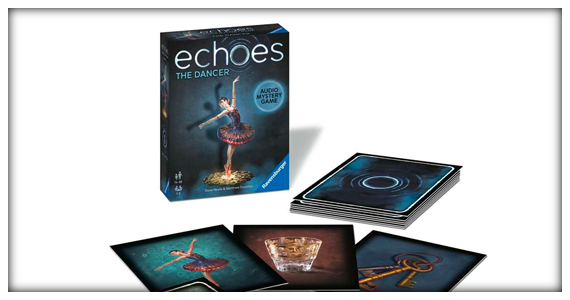
One of the last acquisitions to my gaming collection was the card game “The Dancer”, one of the titles from Echoes’ series. Basically, the game is an audio-based experience that uses cards and a smartphone app to scan the images in the deck, showing dialogues, sounds, and music to the players.


“The Dancer” narrates a mysterious case that mixes supernatural forces and a murder?. It is a co-op game where all the players must listen to the sounding hints to put the cards in order to solve the case. The app system is very clever and interesting; it requires extreme attention to details and all the solutions are easily shown using the smartphone.

A very interesting feature of “The Dancer” is the UX writing strategy behind the narrative. UX writing, like designing and coding for UX, is a design and engineering process; it is an iterative process of creation and evaluation that uses texts to improve an experience (PODMAJERSKY, p.30, 2019).

In the case of a card game with a sound app, the game designing team must search for a strategic connection between the images scattered in the table and the text players will listen to during the experience. It is a fundamental thing to build the storyline using the best words to create a sense in the game.

Other point to highlight in the case of a complementary app: the UX text patterns in digital platforms like titles, buttons, descriptions, labels, controls, text input fields, transition texts, confirmation/error messages, and notifications must be planned to create an easy access to the narrative (PODMAJERSKY, p.67, 2019).

In a synthetic way: the cards are physical items that allow players to interact collaboratively in a physical space, but the true immersive experience comes from the materialized text in audio format (where the UX writing strategy is built).

I want to try the other games from the Echoes’ series.


Reference:

PODMAJERSKY, Torrey. Strategic writing for UX: drive engagement, conversion, and retention with every word. Sebastopol: O'Reilly Media, 2019.

domingo, 4 de novembro de 2018

Three gaming interfaces to pay attention to

In this post, I want to discuss some gaming interfaces and user experience features in games. I will use my three favorite games for this present post, but the subject is broader and allows a bigger discussion that I intend to return to, next month.

DEAD SPACE (PS3)

In the horror-fiction game Dead Space, the interface is something to pay special attention to. The character’s (Isaac Clarke) main statuses are disposed in a very strategic way: the life meter is located on his back in the shape of a spinal light, the weapon ammunition is showed as a small number when you aim the gun and, finally, the game has an interesting resource that is a luminous laser to help you easily locate the way the character must go (and it saves time in the complex scenario maze).


HERO (Atari)

This one is a relic from the beginning of the video-gaming era. HERO is an interesting case of user experience (UX) and interface with very limited constrols. Atari’s joystick has only one button and one directional stick; with only two resources, HERO’s designers implemented a wide range of possibilities: when you press the red button in the joystick the character uses its laser vision to kill enemies; by pressing down the control stick the character launches a dynamite do open walls and, finally, when you hold the control stick up the character flies using a jetpack. A very rich interface and UX created using minimal resources.


Entwined (PS4)

One of my favorite indie games Entwined is a great case of interface and usability. All the gameplay is based on how you can manage the two control sticks from PlayStation’s joystick. During the whole experience, you must control the two mystic entities by only using circular movements; the user experience is focused on coordinating two different positions simultaneously (a challenge to your dexterity). Entwined is an incredibly created game, using only circular movements in two control sticks, a master class of game design.


On the three cases related in the post, we can clearly see the ideas of how games must strategically use concepts from the user experience field. To finish this conversation I want to share some content from the site nForm about this subject:

“The user experience is not one simple action – it is an interconnected cycle of attempting to satisfy hopes, dreams, needs and desires. This takes the shape of individuals comparing their expectations to the outcomes generated by their interaction with a system. Managing expectations then becomes key to successfully providing a satisfying “return on experience” that delights users and generates shared, sustainable value”.

#GoGamers