Since last year, I've been working on an amazing project: the mobile game ARENA OF DREAMS by the company Fanatee. I worked with the narrative and UX writing part of the project.
The game will have various modes, and in the following video, you can already check out a preview of the production. The release is scheduled for the end of this year!
Check the official ARENA OF DREAMS' site by clicking here.
Prepare your smartphone! Today is the grand premiere of my new game: STENA was launched in the Google Play (and soon will be launched in App Store)! Check the trailer below and download for free, now!
I discussed a little bit of the game’s gaming design process (errors, prototyping, wireframes etc.) in this post. But, in this one, I want to talk about the creative process, or, in other words: where did the idea for this game come from?
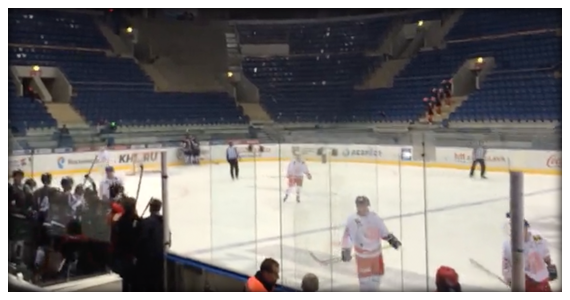
The year was 2016. I was living in Bratislava (capital of Slovakia) and writing my doctorate thesis in a partnership with Paneurópska Vysoká Škola. In my free time, one of my favorite things was to walk and visit pubs in the old town (or “Staré Mesto” in Slovak language). One day I was in my favorite pub, Zbrojnoš, watching an ice hockey game on TV. One important detail: I’m not a sports fan, but ice hockey is a national passion in Slovakia, so I decided to understand the game better (I even went to Ondrej Nepela Arena to watch the Králi team from my university play).
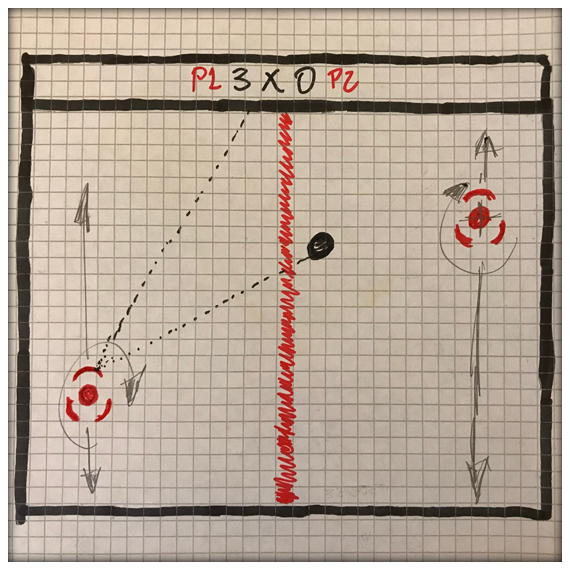
Trying to discover the mysteries behind ice hockey, two things caught my attention: how difficult it is to put the puck inside the goal and the possibility to skate freely in the whole space (including behind the goal). So, I had an idea: a PONG game with ice hockey rules. Well, that was the starting idea, but the final product is very different. One day I started to sketch some wireframes and created this very first version: a game for two players with rotating paddles where the goal is to hit the center of the opponent's engine.
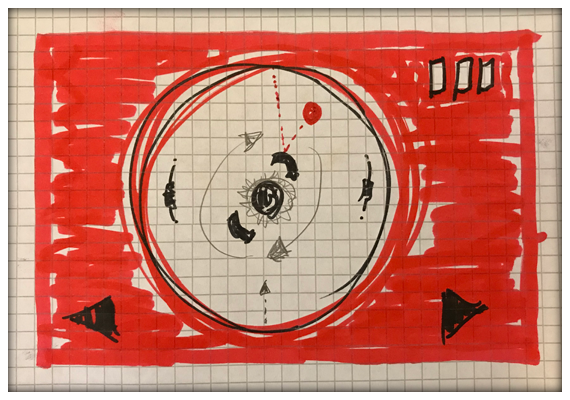
Well, too complicated. I started to simplify the idea. I started to think about one-player experience, mobile media experience, fast games, and minimal design. So, the rounded space appeared in front of me. I drew a circular arena with different kinds of risks and obstacles. The final touch: the game must be punitive and hard in a way that only games like DARK SOULS can be. =)
I showed more detailed wireframes to my friend Jakub and asked him: “is there any Slovak word that represents, at the same time, the idea of wall, protection and shield?”. He answered: “Yes! STENA is the word”.
So, this is a detail from the creative process of my new game! Always pay attention to small details around you. Always keep a notebook with you. Game ideas are always around, ready to be materialized.
In November I will launch my new mobile game: STENA! Final tests are on the run! STENA is a reimagined version of the classic PONG arcade; but, instead of horizontal paddles settled for a two-player match, STENA has a circular scenario where, in solo mode, the player must defend the core of each stage with multiple paddles rotating 360º.
Today is a happy day for me. In a partnership with Sioux Studio (São Paulo) I’m launching my new mobile game named MIND ALONE.
I already wrote about this game here and now I’m presenting the final version, ready for download.
MIND ALONE is an experimental mobile game that uses puzzle mechanics to create a dark narrative about somebody trapped in their own mind. Each puzzle is a memory and the player needs to solve them to find hints about how it happened. Check the trailer below:
It’s the first game of a trilogy and it’s free for download on Apple and Android platforms.
We are just adjusting some puzzles – any feedback would be awesome.
One more for the portfolio and for the game designing classes!
Cengage Learning has just launched my new book in Brazil, today. GAME CULTURA: COMUNICAÇÃO, ENTRETENIMENTO E EDUCAÇÃO(GAMING CULTURE: COMMUNICATION, ENTERTAINMENT AND EDUCATION) is a study addressing educational aspects, narratives, questions and marketing strategies involving games. The final words were written by Uruguayan game designer and researcher Gonzalo Frasca (¡Gracias!, @frascafrasca!).