One important thing about game design is the ability to learn from games. The act of creating a repertory full of different references and mechanics is fundamental for the work of a game designer.
With great knowledge of these points it is possible to recreate game mechanics. To demonstrate this, I will use as an example in this post a game that I created: ÁLMOK.

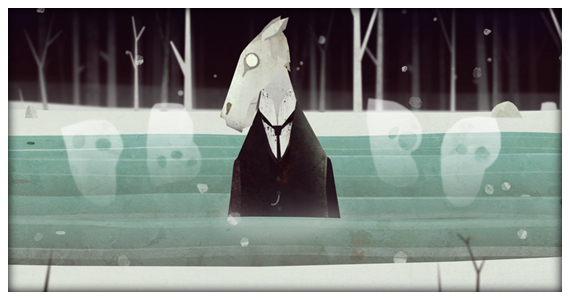
ÁLMOK is a card game for 2 to 4 players that uses an oneiric world as a scenario. Players need to find combinations of dreams to escape from a nightmare dimension.
The game mechanics were based in the classic memory game, with some modifications. In the original memory game, the idea is to find a pair of equal images, but in ÁLMOK, the players need to find three of a kind. After a player finds a “combo” of three cards, he or she earns a special coloured gem. Each gem has a special power (like discard cards from the table, see hidden cards, etc.) that could be used in the turn of a player.
So, in essence, it’s a memory game, but we have some “turbo” modifications.
The game is played with a 64 deck of cards in a 8x8 grid that offers a major challenge for the player’s mind.
Ceilikan Games launched the game in Brazil in February 2013. The art made by me and ÁLMOK means “dreams” in Hungarian language.
At this moment, I’m working on a translation into English for the rules and a print and play version to make available for download to non-Portuguese speakers. Wait for news!
With great knowledge of these points it is possible to recreate game mechanics. To demonstrate this, I will use as an example in this post a game that I created: ÁLMOK.
ÁLMOK is a card game for 2 to 4 players that uses an oneiric world as a scenario. Players need to find combinations of dreams to escape from a nightmare dimension.
The game mechanics were based in the classic memory game, with some modifications. In the original memory game, the idea is to find a pair of equal images, but in ÁLMOK, the players need to find three of a kind. After a player finds a “combo” of three cards, he or she earns a special coloured gem. Each gem has a special power (like discard cards from the table, see hidden cards, etc.) that could be used in the turn of a player.
So, in essence, it’s a memory game, but we have some “turbo” modifications.
The game is played with a 64 deck of cards in a 8x8 grid that offers a major challenge for the player’s mind.
Ceilikan Games launched the game in Brazil in February 2013. The art made by me and ÁLMOK means “dreams” in Hungarian language.
At this moment, I’m working on a translation into English for the rules and a print and play version to make available for download to non-Portuguese speakers. Wait for news!