By Vince (@vincevader)
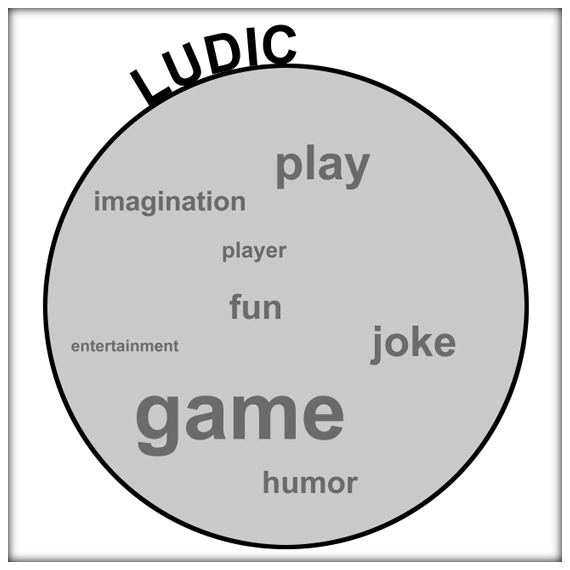
One year ago I started posting here about gaming concepts, game design, gamification/ludification, games and many more aspects of the ludic universe.
And, 84 posts later, the blog is still alive and kicking.
I want to thank you all for the feedback, e-mailing and the great acquaintances I made through the blog during this year.
And to celebrate the year one of the Gaming Conceptz we have a great interview with Gonzalo Frasca. Enjoy! Go gamers!
Gonzalo Frasca (Montevideo, 1972) is a game designer and academic researcher focusing on serious and political videogames. Frasca is originally from Uruguay, where he established Powerful Robot Games, a videogame studio in Montevideo. In video game theory, Frasca belongs to the group of so called "ludologists", who consider video games to be simulations based on rules. They see video games as the first simulational media for the masses - which means a paradigm shift in media consumption and production.

1) How You've become a serious games researcher?
I'm interested in games. Serious games try to take games even further. So, anybody who's interested in pushing the envelope in games should be interested in serious games. Even if most serious games do not succeed, just thinking about the questions they raise is enough to make us better designers.
2) What would be the best definition for ludology? And narratology?
Ludology is just a word for game and play research. It's as simple as that. There are several definitions of narratology, but basically it's the discipline that studies stories and storytelling.
3) We can see a "wave" of studies about the use of game mechanics in a lot of areas of knowledge. What's your point on the buzzword "gamification"?
I've seen a lot of buzzwords come and go. I think it's positive people are interested in applying games on other fields. If gamification is here to stay or will fade, time will tell. In general, I generally try not to trust recipes and most of what I've seen about gamification looks like a magic recipe to me. But I could be wrong.
4) The use of serious games for political campaigns and education has improved in the last years?
Not really. And that is an interesting question. The simple answer is that they are not relevant. I believe we're still waiting for critical mass. Sooner or later it'll happen. Specially in education. That's my current obsession. I would actually say that these days I'm more interested in education than in games. Well, actually, it's hard to see one without considering the other.
5) The world is going more and more ludic with new digital interfaces and social media. That's a fact. Are the companies and advertising agencies ready for these changes?
I'm not sure. Videogames are still considered cool per se, not because of what they can do. Again, we're still in the very early ages of this genre. I know it doesn't seem like it. It's not because of technology: it's about social conventions. The more we incorporate play into our culture, the easier it'll be. I know this sounds totally hippie and new agey. But play is basically about not being afraid of doing. Play literally will make us free.
6) Send a final message to the new researchers of the gaming concepts and game design field.
Play my new iOS game: Space Holiday (LINK HERE). It's not serious at all, not political: it's a plain, full puzzle game. It was a challenge I set to myself: I always liked puzzle games and I always thought it was the kind of game I couldn't make myself. I worked really hard to prove myself wrong.
In any case, stay away from labels: researcher, designer, creator, player - those categories overlap all the time. You can't be good at one without being good at the others.
One year ago I started posting here about gaming concepts, game design, gamification/ludification, games and many more aspects of the ludic universe.
And, 84 posts later, the blog is still alive and kicking.
I want to thank you all for the feedback, e-mailing and the great acquaintances I made through the blog during this year.
And to celebrate the year one of the Gaming Conceptz we have a great interview with Gonzalo Frasca. Enjoy! Go gamers!
Gonzalo Frasca (Montevideo, 1972) is a game designer and academic researcher focusing on serious and political videogames. Frasca is originally from Uruguay, where he established Powerful Robot Games, a videogame studio in Montevideo. In video game theory, Frasca belongs to the group of so called "ludologists", who consider video games to be simulations based on rules. They see video games as the first simulational media for the masses - which means a paradigm shift in media consumption and production.
1) How You've become a serious games researcher?
I'm interested in games. Serious games try to take games even further. So, anybody who's interested in pushing the envelope in games should be interested in serious games. Even if most serious games do not succeed, just thinking about the questions they raise is enough to make us better designers.
2) What would be the best definition for ludology? And narratology?
Ludology is just a word for game and play research. It's as simple as that. There are several definitions of narratology, but basically it's the discipline that studies stories and storytelling.
3) We can see a "wave" of studies about the use of game mechanics in a lot of areas of knowledge. What's your point on the buzzword "gamification"?
I've seen a lot of buzzwords come and go. I think it's positive people are interested in applying games on other fields. If gamification is here to stay or will fade, time will tell. In general, I generally try not to trust recipes and most of what I've seen about gamification looks like a magic recipe to me. But I could be wrong.
4) The use of serious games for political campaigns and education has improved in the last years?
Not really. And that is an interesting question. The simple answer is that they are not relevant. I believe we're still waiting for critical mass. Sooner or later it'll happen. Specially in education. That's my current obsession. I would actually say that these days I'm more interested in education than in games. Well, actually, it's hard to see one without considering the other.
5) The world is going more and more ludic with new digital interfaces and social media. That's a fact. Are the companies and advertising agencies ready for these changes?
I'm not sure. Videogames are still considered cool per se, not because of what they can do. Again, we're still in the very early ages of this genre. I know it doesn't seem like it. It's not because of technology: it's about social conventions. The more we incorporate play into our culture, the easier it'll be. I know this sounds totally hippie and new agey. But play is basically about not being afraid of doing. Play literally will make us free.
6) Send a final message to the new researchers of the gaming concepts and game design field.
Play my new iOS game: Space Holiday (LINK HERE). It's not serious at all, not political: it's a plain, full puzzle game. It was a challenge I set to myself: I always liked puzzle games and I always thought it was the kind of game I couldn't make myself. I worked really hard to prove myself wrong.
In any case, stay away from labels: researcher, designer, creator, player - those categories overlap all the time. You can't be good at one without being good at the others.