Some good stuff from the Twitter of Reiner Knizia, one of my favorites game designers:
1.) My First Principle of Game Design: Start somewhere new and you have the greatest chance to end up somewhere new!
2.) Lead a game to worldwide success: keep it simple that people understand it; make it different that people recognize it; but keep it familiar.
3.) To design good games, you need peace in your heart - even for a first-person shooter.
Follow Knizia on Twitter (@ReinerKnizia), click here.

sexta-feira, 13 de abril de 2012

terça-feira, 10 de abril de 2012
Common elements between games
By Vince
In this present post I want to discuss a wide notion of essential elements that we can find in any kind of game. Take a few seconds to make a brief reflection: Which are the similarities between “Quake” and “Poker”?

Quake is a classic first person shooter with a deep story about a massive alien war in a high technological future. Poker is a traditional and abstract card game about creating card sequences to earn points.
Both games are very unique but – in a first moment – have nothing in common. But I think it’s possible to establish a list of common elements amongst two games. Let’s check some possibilities:
1) First of all, both games have a purpose. In Quake You need to destroy aliens and in Poker You have to make the best card sequences.
2) Both games have players and rules. In Quake You can play against the computer alone or in a multiplayer session; Poker needs at least two players and gets better with five or six people playing. But essentially all the players need to follow the rules that define boundaries. If You are not following the rules You are cheating and this is not fair play.
3) Both games have limited resources. In Quake are life, stamina and ammunition. In Poker is the deck of cards with four cards of each kind.
4) Game mechanics: in Quake your character aims and shoots to kill aliens stage by stage with a wide range of weapons. In Poker you pick cards trying to create the best combos and eliminate opponents.
5) We have conflicts and possibility of fun in both cases.
I think it’s possible to generate a wide list with a lot of similarities, but instead of it I want to purpose an exercise to You: search your memory and try to find two games of very different categories; in the next step, try to create a list of common elements as You saw above.
Good work!
Szia!
In this present post I want to discuss a wide notion of essential elements that we can find in any kind of game. Take a few seconds to make a brief reflection: Which are the similarities between “Quake” and “Poker”?
Quake is a classic first person shooter with a deep story about a massive alien war in a high technological future. Poker is a traditional and abstract card game about creating card sequences to earn points.
Both games are very unique but – in a first moment – have nothing in common. But I think it’s possible to establish a list of common elements amongst two games. Let’s check some possibilities:
1) First of all, both games have a purpose. In Quake You need to destroy aliens and in Poker You have to make the best card sequences.
2) Both games have players and rules. In Quake You can play against the computer alone or in a multiplayer session; Poker needs at least two players and gets better with five or six people playing. But essentially all the players need to follow the rules that define boundaries. If You are not following the rules You are cheating and this is not fair play.
3) Both games have limited resources. In Quake are life, stamina and ammunition. In Poker is the deck of cards with four cards of each kind.
4) Game mechanics: in Quake your character aims and shoots to kill aliens stage by stage with a wide range of weapons. In Poker you pick cards trying to create the best combos and eliminate opponents.
5) We have conflicts and possibility of fun in both cases.
I think it’s possible to generate a wide list with a lot of similarities, but instead of it I want to purpose an exercise to You: search your memory and try to find two games of very different categories; in the next step, try to create a list of common elements as You saw above.
Good work!
Szia!
domingo, 8 de abril de 2012

segunda-feira, 2 de abril de 2012
Games + Brazil
by Vince
So I've decided to write more about this subject, even with the low number of official researches we have in brazilian territory.
I want to share a good information in this post. It's about the number of brazilians with videogame consoles at home.
 One research presented in an important brazilian videogame fair named "GameWorld" revealed that 60 million people have at least one videogame console at home. It is almost 33% of Brazil's population.
The research revealed another curious fact: 48% of the players buy illegal games and only 17% of the sales occurs at game shops.
The company "NC Games" with an important research institute (IBOPE) did the survey.
So, its good news to our market and more than sufficient to prove that is possible to develop a brazilian videogame industry.
Szia!
Notes:
Click here to read about the research (portuguese)
sexta-feira, 30 de março de 2012
A new book for my library
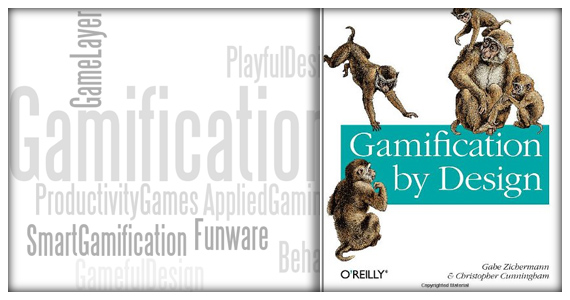
Arrived today another title for my game design shelf. I want to discuss more about gamification and I think this book has a good point of view. Buy here (link).

And below the book description:
"What do Foursquare, Zynga, Nike+, and Groupon have in common? These and many other brands use gamification to deliver a sticky, viral, and engaging experience to their customers. This book provides the design strategy and tactics you need to integrate game mechanics into any kind of consumer-facing website or mobile app. Learn how to use core game concepts, design patterns, and meaningful code samples to a create fun and captivating social environment.
Whether you're an executive, developer, producer, or product specialist, Gamification by Design will show you how game mechanics can help you build customer loyalty".
Szia!
And below the book description:
"What do Foursquare, Zynga, Nike+, and Groupon have in common? These and many other brands use gamification to deliver a sticky, viral, and engaging experience to their customers. This book provides the design strategy and tactics you need to integrate game mechanics into any kind of consumer-facing website or mobile app. Learn how to use core game concepts, design patterns, and meaningful code samples to a create fun and captivating social environment.
Whether you're an executive, developer, producer, or product specialist, Gamification by Design will show you how game mechanics can help you build customer loyalty".
Szia!
segunda-feira, 26 de março de 2012
Ludificator
In this moment I'm writing a book named "LUDIFICATOR". It's a quick reference guide for the newbie game designers. I hope someday this content will be translated to english.
 In the third chapter of my book I bring an idea I've discussed in the first post of this blog (link here): the idea of Ludification.
And now I have a good graph to illustrate this concept, as you can see below:
 I'm trying to explain that the idea of Lufication is better than Gamification because in my point of view, the Game is inside the Ludic Field.
In my book I tried to demonstrate that it is more adequate to call activities with game mechanics as Ludic Interfaces.
 In the third chapter of my book I bring an idea I've discussed in the first post of this blog (link here): the idea of Ludification.
And now I have a good graph to illustrate this concept, as you can see below:
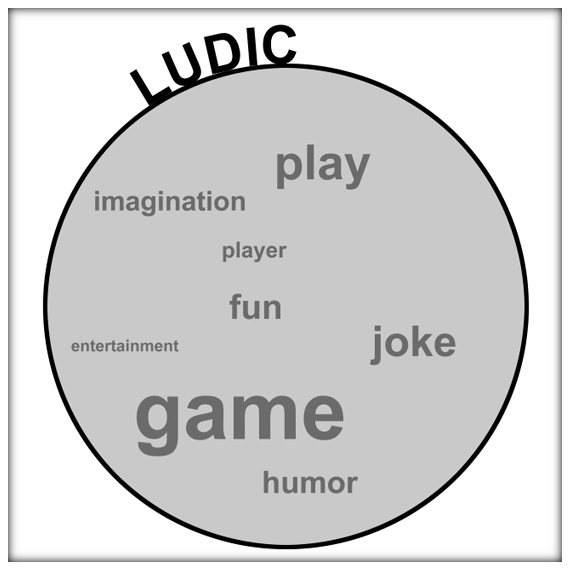 I'm trying to explain that the idea of Lufication is better than Gamification because in my point of view, the Game is inside the Ludic Field.
In my book I tried to demonstrate that it is more adequate to call activities with game mechanics as Ludic Interfaces.
Hang on! The book is coming out soon!
Assinar:
Postagens (Atom)