Mostrando postagens com marcador lovecraft. Mostrar todas as postagens

quinta-feira, 1 de setembro de 2022

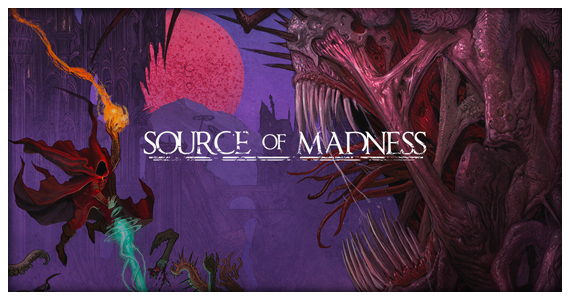
Source of Madness: elevating the roguelike experience

Source of Madness is a side-scrolling dark action roguelike game set in a twisted Lovecraftian inspired world, and powered by procedural generation and AI machine learning. Basically, each time you enter a run inside the gaming world, you will find a completely new scenario with new monsters, challenges, treasures, and achievements. Even the creatures are always changing in Source of Madness; if you play it a thousand times, you will probably find a thousand different types of enemies.


Have a look into the Source of Madness’s mood and esthetics below:


I think I played very few games with a somber atmosphere like this one. The dark scenario with a disturbing soundscape made of monsters screams offers an experience that few platform games of this category can present.

This game touched my gamer heart in a special way: it received a lot of negative reviews because of the chaotic gameplay and interface, but, for me, it’s the big feature from the game. This roguelike is unique in its composition and programming. But the use of AI machine learning and procedural generation is nothing without the storytelling component. The uniqueness of the game comes from a perfect balance between the gaming architecture and the obscure Lovecraftian narrative full of mysterious (and bizarre) cutscenes and the direct references to the ancient ones from Mr. Howard Philips's mind.

Source of madness is a great example of good use of technology to create an immersive experience. However, it’s a great example, too, of how to blend the narrative layer with good mechanics that comes from the gaming code.

This game is in my top 3 from this year. Another indie game. One more for my list.

#GoGamers

segunda-feira, 11 de janeiro de 2016

From the NON-GAME to the GAME

Jesper Jull, in his book Half-Real (2005, p.36), contextualizes a game as the union of six elements: fixed rules, variable outcome, valorization of outcome, player effort, player attachment to the outcome, and negotiable consequences.

On the other hand, Juul understands that in the opposite side of games we can find the “not games”: the movies, books, children playing, and other activities that does not meet the previously mentioned gaming features. However, between the non-games and games we can see a gray area made up of elements that bring together some gaming features; Juul calls this area as borderline cases.

Source: Source: Juul, 2005, p.44.

But the question here is: is it possible for a content to transit through these three areas? The answer is yes. Let’s take as an example the work of Howard Philips Lovecraft, the author behind the Cthulhu mythos. Lovecraft’s original content are horror books full of cosmic demi-gods and abyssal creatures (non-games); but the books’ narratives were transformed in paper and pen role playing games (a borderline case that reunites some elements from games); finally it’s possible to play the computer game Dark Corners of The Earth, one product that unites all the characteristics of a game, as Juul says. Check the gameplay:


It’s important to understand the contemporary scenario of communication and consumption as a rich field to explore these kinds of transmediatic developments. Entertainment is a powerful currency to investigate new possibilities of business models.


Reference:

JUUL, Jesper. Half-Real: Video Games between Real Rules and Fictional Worlds. USA: MIT Press, 2005.