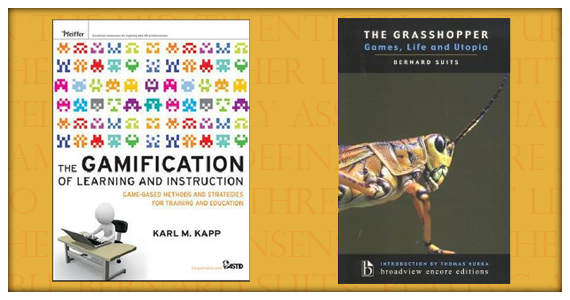
•The gamification of learning and instruction by Karl M. Kapp (link)
•The Grasshooper by Bernard Suits (link)

 Since I guess that I have been in a privileged position to witness the development of this debate over the last four years, I decided to write down a list of the most common misconceptions that it generated. It is not my main intention in this paper to support ludology but rather making explicit all the contradictions that prevented this debate from taking place. However, I do not pretend to be totally objective neither: I do not favor narrative as a privileged means for understanding videogames for reasons that have been previously exposed by several authors and are beyond the scope of this article. Finally, I would like to make clear that I will be speaking only for myself and I am the only responsible for all the opinions expressed in this article.
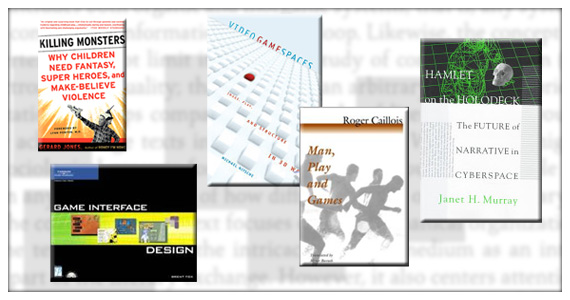 •Hamlet on the holodeck: the future of narrative in cyberspace by Janet Horowitz Murray (link)
 And for last I want to leave a very interesting link from Jesper Juul´s site: its a "Dictionary of Video Game Theory". Click here to go to the URL.
 In this volume, people of diverse backgrounds talk about tabletop games, game culture, and the intersection of games with learning, theater, and other forms. Some have chosen to write about their design process, others about games they admire, others about the culture of tabletop games and their fans. The results are various and individual, but all cast some light on what is a multivarious and fascinating set of game styles.
 As a promotional game, it is important to create points in the narrative where we can offer pay services from the mobile company. So, we decided to put – as a help to the players – hints and tips of the game that the player can buy using services and other tools of the company.
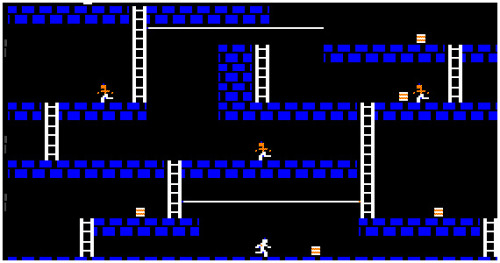 •The goal: is the specific outcome that players will work to achieve
 4.In the USA:


 Figure 1: the interface of the game. There´s a time counter, a score for points and a bonus multiplier. The icons in the center of the screen reflects social problems to be solved. (design and code by Cenildon Muradi Jr.)
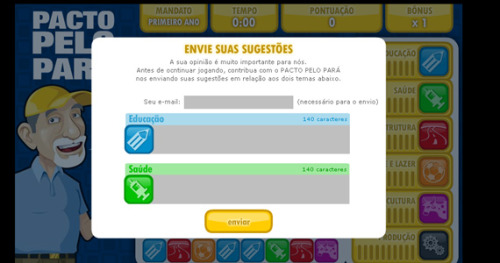 Figure 2: in the end of a stage it's possible to send opinions, critics and praise about the social problems to the political group.
 I had the chance to participate in many panels and see excelent key notes, but it was during a presentation of Professor Espen Aarseth – a major figure in the emerging fields of video game studies and electronic literature – that I had the insight that led me to start writing on this blog.
