Mostrando postagens com marcador book. Mostrar todas as postagens

terça-feira, 12 de agosto de 2025

There are no fixed rules in UX for games, and everything can be reconfigured

Last month, the Brazilian publisher SENAC released my new book, "Introdução para UX em games" (Introduction to UX in games). There is no English version yet, but I'd like to share a translated excerpt from the book that I'm very fond of.


If we are designing an e-commerce site for a wide audience, for practical reasons, we would never use a black background with dark blue text and out-of-focus photos to facilitate the online shopping experience. However, in a game, this is perfectly valid, especially if we are using this "hidden" text as part of a puzzle to be solved. The first game in the Silent Hill series uses this technique a lot, forcing the player to explore the scenery in search of clues, weapons, equipment, and ammunition. In this case, "complicating" the player's life is what brings the game experience to life.

We often say that explaining a game's procedures is a basic part of an experience with a beginning, middle, and end. But the game Tunic explains nothing to the player. You literally have to guess the commands and use your experience from other games you've played to progress through the narrative. Of course, there are various tutorials on the internet to illustrate the content of Tunic, but the game's unique feature is that you get to fumble through and solve each phase with guesses, hunches, and prior knowledge from other experiences. In the case of a food delivery app, however, we don't want the "challenge" of figuring out how to order a meal; we want something with clear instructions.

We've also mentioned the need for clarity of elements, icons, figures, shapes, colors, and so on, in an interface. But games with a bullet hell premise, such as Enter the Gungeon, are interesting precisely because they make the interface chaotic, creating a challenge of dexterity to escape enemy fire. The stroboscopic effect on the screen in Super Hexagon is a deliberate hindrance that makes sense within the game's skill-based challenge. If we are choosing a movie on a streaming service's interface, the last thing we want is an infinite number of graphical elements or flashing lights getting in the way of reading a review or accessing a movie or series' trailer.

Everything can be reconfigured, re-signified, and remodeled in terms of UX.

Perhaps the great differentiator of your game is a "mistake" in UX standards. The experiences on other platforms help us to compose something more concise and impactful. The game Baba is You is famous for allowing the player to interfere with the level's programming and change the behavior of the elements on the screen. Every level of Baba is You starts with some error or problem in the interface, and you have to move programming blocks to reconfigure the scenario and solve the game's puzzles.

To do this, you need a repertoire. You need to play everything, to experience everything in playful terms. Mixing experiences from other areas—not just games—is also a differentiator that can be surprising in terms of user experience. Above all, most of the time we are not going to develop games for ourselves or for audiences who are similar to us. The exercise of alterity and putting yourself in the target audience's shoes is what will make a difference when creating the experience.

#GoGamers

quarta-feira, 2 de outubro de 2024

On the necessity of uncertainty in games

This week, I revisited one of my favorite game design books: "Uncertainty in Games" by Greg Costikyan. Costikyan is a renowned game designer, having contributed to successful RPGs such as the 1987 Star Wars, TOON, and Paranoia. I decided to reread this title due to an article on UX in gaming that I'm currently developing.

I came across a particularly interesting passage on page 16. Costikyan makes a compelling point: when we're shopping online, operating heavy machinery, or voting in elections, uncertainty and challenge are the last things we desire. In normal circumstances, we prefer simplicity, certainty, and consistency.


Indeed, those of us working in the gaming industry often hear people say they want to make their apps or websites more "game-like" or "gamified"; however, a staggering 74.3% of the time, the term "gamified" is misused 😁. Is this really the case? Costikyan offers a vivid example: imagine transforming Microsoft Word into a game. Let's say that to bold a text, you need to be a level 12 Word user. Before reaching that level, every time you attempt to bold text, the software performs a check against your level. If you fail the check, it applies a random font effect instead of bold. This wouldn't be fun; it would be frustrating.

Essentially, when designing most interactive products (software, apps, systems, etc.), eliminating uncertainty is desirable. When designing games, a degree of uncertainty is essential. This is why people who try to apply some of Jakob Nielsen's human-computer interaction ideas to games often miss the mark. Interface clarity may still be desirable, but eliminating challenges and uncertainties is not. Games should be, in some sense, "difficult to use," or at least, not trivial to win.

To further illustrate humanity's fascination with uncertainty, consider the motivations of those who engage in online gambling.

#GoGamers  


Reference:

COSTIKYAN, Greg. Uncertainty in games. Massachusetts: MIT Press, 2013.

sexta-feira, 3 de maio de 2024

Some notes on my recent reading in game design

Last week, I completed reading The Game Designer's Playlist: Innovative Games Every Game Designer Needs to Play by Zack Hiwiller. This book proved to be particularly engaging due to its innovative "playlist" approach. The format functions as a comprehensive compendium, showcasing the rich variety within the field of gaming.


I have extracted two key points from the book that I intend to utilise in a future article. These points are outlined below.

The element that separates games from other art forms is its requirement of audience participation. No game exists in a bubble distinct from its consumption by players. Although more traditional media need to consider the social and cultural framework in which the media will be consumed and interpreted, game authors also have to consider how the consumers will interact with the media itself. Authors generally are not concerned with how quickly the reader reads; musicians don’t generally concern themselves with the specs of the listener’s stereo. But game designers need to consider the actual act of playing as an element of their art. It is in the act of playing itself that games are uniquely qualified to deliver meaning. P.69


As we discussed in the previous chapter, one of the features of games that positions them in a different space from its more static media brethren is that the interactive nature of games opens the doors to new rhetorical and aesthetic effects stemming from that interactivity. A game can be beautiful aesthetically, but it can also be beautiful in how its systems function. P.86

We remain steadfast in our dedication to expanding our knowledge and expertise in this field. 🎮 🎲 😀


Source: HIWILLER, Zack. The game designer’s playlist: innovative games every game designer needs to play. New Jersey: Pearson Education, 2019.

#GoGamers

sexta-feira, 1 de fevereiro de 2019

Why do you play games?

In the first post of this year, I want to share some content from the book I’m reading at the moment: Playing smart - on games, intelligence, and artificial intelligence by Julius Togelius. The author discusses many aspects on how games challenge us and what we can expect from games that use artificial intelligence in the near future.


One of the first points discussed by Togelius is about the question I already brought many times in this site: why do we play games? It’s not easy to answer (and we have many different views for this subject) but I think it’s essential to gather multiple points of view to create a more solid opinion.

Togelius launches the question: why do you play games? And starts his answer with a very interesting argument that most of the time we are playing games for many reasons but all the time – despite the game we are playing – we are doing an exercise of intense planning.

Below, I want to share this excellent content from his book and recommend the reading for all the followers of this site:

Why do you play games? To relax, have a good time, lose yourself a bit? Perhaps as a way of socializing with friends? Almost certainly not as some sort of brain exercise. But let’s look at what you are really doing: You plan. In Chess, you are planning for your victory by imagining a sequence of several moves that you will take to reach checkmate, or at least capture one of your opponent’s pieces. If you are any good, you are also taking your opponent’s countermoves into account and making contingency plans if they do not fall into your elaborately laid traps. In Super Mario Bros., you are planning wheter to take the higher path, which brings more reward but is riskier, or the safer lower path. You are also planning to venture down that pipe that might bring you to a hidden treasure chamber, or to continue past it, depending on how much time you have left and how eager you are to finish the level. You may be planning to eat the power-up that lets you get through that wall so you can lick a switch that releases a bean from which you can grow a beanstalk that lets you climb up to that cloud you want to get to. In Angry Birds you are planning where to throw each bird so as to achieve maximum destruction with the fewest birds. If you crush the ice wall with the blue bird, you can then hit that cavity with the black bomb bird, collapsing the main structure, and finish off that cowardly hiding pig with your red bird. (TOGELIUS, 2019, kindle edition – position 412)

#GoGamers


Reference:

TOGELIUS, Julius. Playing smart - on games, intelligence, and artificial intelligence. London: The MIT Press, 2019.

segunda-feira, 16 de outubro de 2017

Blood, sweat, and pixels: the triumphant, turbulent stories behind how video games are made

In this moment I'm reading the excellent book "Blood, sweat, and pixels: the triumphant, turbulent stories behind how video games are made". True stories about how the work in the gaming industry could be full of anxiety and despair.

Jason Schreier (the author) interviewed more than 100 professionals from this field and the result is a book with many different views about the creative process behind a game, the difficulties, the mistakes and victories.

Schreier (2017) in the introduction of the book discusses about why is so hard to make games. The author points out that: 1) games are interactive; 2) technology is constantly changing; 3) the tools are always different; 4) scheduling is impossible; 5) it's impossible to know how "fun" a game will be until you've played it. From this point to the end, in each chapter, one game is used as an example to explain the how this area (as the title of the book says) is full of "blood, sweat, and pixels".


Excellent reading.

Click here to buy.


Reference:

SCHREIER, Jason. Blood, sweat, and pixels: the triumphant, turbulent stories behind how video games are made. New York: Harper, 2017.

sexta-feira, 13 de janeiro de 2017

To think about fun, play and games

"Fun is the aftermath of deliberately manipulating a familiar situation in a new way" ( BOGOST , 2016, p.57)


Source: BOGOST, Ian. Play anything: the pleasure of limits, the uses of boredom, & the secret of games. New York: Basic Books,2016.

segunda-feira, 26 de dezembro de 2016

Book: Levelling Up - The Cultural Impact of Contemporary Videogames

Wow! I want to share very good news in this last post of the year: in 2015, I presented the paper “Observing Iterative Design on the Game Dominaedro”, that I wrote for the Video Game Cultures & The Future of Entertainment conference (VG7).

Yesterday, I received awesome news from the organizers: all the papers from the conference were compiled in a fantastic book named "Levelling Up: The Cultural Impact of Contemporary Videogames". Edited by Brittany Kuhn and Alexia Bhéreur-Lagounaris, and published by Inter-Disciplinary Press (Oxford) the book is a wide discussion about gaming culture in the contemporary scenario. Check the cool cover below:


CLICK HERE to buy!

Below, you can read the book's synopsis:

"Videogames have come a long way from Super Mario Bros and Pong. After thirty years of technological advancements and academic criticisms, videogames have become a fertile ground for social change and virtual identity creation. Where big game companies like Bioware, Bethesda, and Rockstar Games have begun to include more inclusive narratives, independent game companies are beginning to delve into the field of ‘serious games,’ capitalising on the popularity and prevalence of social networking to inspire and assist non-game-related fields. While all of this is happening, a new subculture has become to dominate social media: that of the fanboy and the Let’s Play YouTube video phenomenon. It is a dynamic time in videogame studies, from the perspective of player, designer and theorist. However, with the advent of virtual reality, the question remains: where will videogames, and subsequently our society, ‘level up’ to next?"

#GoGamers

sexta-feira, 21 de outubro de 2016

Book: Play Anything - the pleasure of limits, the uses of boredom, and the secret of games

I bought a new book for my ludic library: Play Anything - the pleasure of limits, the uses of boredom, and the secret of games. Written by the game designer and philosopher Ian Bogost, the book is an awesome discussion about limitation, boredom, games and fun.

You can buy on Amazon. Click here.


Check the synopsis below:

How filling life with play—whether soccer or lawn mowing, counting sheep or tossing Angry Birds—forges a new path for creativity and joy in our impatient age.

Life is no game. It’s demanding, boring, and rarely fun. But what if we’ve got games wrong? Playing anything—whether an instrument, a sport, or a video game—takes hard work and makes absurd demands. Where’s the fun in that?

In Play Anything, acclaimed philosopher and award-winning game designer Ian Bogost reveals that play isn’t a mindless escape from boring reality. Instead, play is what happens when we accept limitations, narrow our focus, and—consequently—have fun. Which is also how to live a good life. Manipulating cards to make a poker hand is no different than treating chores and obligations as tools but which we can discover new happiness.

Ranging from Internet culture to moral philosophy, from ancient poetics to modern consumerism, Play Anything reveals how today’s chaotic world can only be tamed—and enjoyed—when we first impose boundaries on ourselves.


#GoGamers

domingo, 12 de junho de 2016

Book: Mapping the Digital - Cultures and Territories of Play

I want to share good news in this post: in 2014, I presented the paper “Health, consumption and entertainment: the Nike brand embodied as a playful experience”, that I wrote along with my friend Marcelo Vasconcellos for the Video Game Cultures & The Future of Entertainment conference (VG6).

This week, I received awesome news: all the papers from the conference were compiled in a fantastic book named Mapping the Digital - Cultures and Territories of Play. Edited by Lindsey Joyce and Brian Quinn, and published by Inter-Disciplinary Press (Oxford) the book is a wide discussion about the state of play and the state of games in contemporary culture.


This is what I call a level upgrade!

CLICK HERE to buy!

Below, you can read the book's synopsis:

"Mappings the Digital: Cultures and Territories of Play is an interdisciplinary discussion about the state of play and the state of games in contemporary culture. This volume takes a critical look and how our cultures and territories are being renegotiated through our engagement with digital media, games, and tools. This volume argues broadly that our tangible world, and our understanding of it, are being renegotiated and remapped by the digital worlds with which we engaged. Specifically, the chapters in this volume analyse linguistic changes; unique in-game cultures and behaviours; and new methods for communicating across real and perceived boundaries, for understanding cultural experiences, and for learning through play. Drawing from the global expertise of scholars within the fields of Cultural Studies, Game Studies, Foreign Language, Science and more, this volume bridges academic boarders to assemble a cohesive and authoritative resource on digital culture and play".

#GoGamers

quinta-feira, 19 de maio de 2016

SHARING THE GOOD NEWS

Cengage Learning has just launched my new book in Brazil, today. GAME CULTURA: COMUNICAÇÃO, ENTRETENIMENTO E EDUCAÇÃO (GAMING CULTURE: COMMUNICATION, ENTERTAINMENT AND EDUCATION) is a study addressing educational aspects, narratives, questions and marketing strategies involving games. The final words were written by Uruguayan game designer and researcher Gonzalo Frasca (¡Gracias!, @frascafrasca!).


CLICK HERE TO BUY!

#GoGamers

quarta-feira, 6 de abril de 2016

What we can learn from the old RPG solo adventure books

If you are an old school gamer and a RPG fan like me, you have probably played in the 80’s or 90’s some of the classic solo adventure books created by Steve Jackson and Ian Livingstone, named Fighting Fantasy Collection. These authors disseminated a very unique kind of entertainment in the form of books. Using the idea of non-linear narrative they materialized some stories where the reader (or the player) could take decisions, combat enemies (rolling dice) and obtain different kinds of equipment for his/her journey (that could be controlled using a special character sheet). One of my favorite books from this collection is The Temple of Terror (LIVINSTONE, 1985).


This narrative fits in the idea of ergodic literature, proposed by Aarseth (1997, p.1), because of the unusual effort readers/players must put in text to advance in the story (roll die, take notes, read the pages without logical order etc.). In Temple of Terror the player will be a warrior entering an adventure inside the Temple of Skelos to fight the evil sorcerer Malbordus. Using a clever system based on choices and number of pages, players must use their memory, solve puzzles and get lucky in the dice to defeat the monsters until reaching the dungeon of Malbordus.


Entertainment aside, rests a question: what lessons this kind of ludic experience can teach to us to develop or study games? Here are some points to think about:

1) This kind of book is perfect to deconstruct. To learn from failures is essential to draw a map. This map is the game’s script. Through it, it’s possible to understand the complex “decision trees” created by the author.

2) After playing the same adventure a number of times, you’ll see strong points and weaknesses of the narrative. You can mark the frequency of combat, dialogues and achievements to have a notion of how to balance your game between different features.

3) Temple of Terror, specifically, is an exercise of suspension of disbelief. Can you imagine a dungeon full of goblins, demons, skeletons, dragons and other fantastic beings living in a healthy way? Makes no sense if you think rationally, but in this format it makes all the sense. The script is a little bit naïve, but, on the other hand, it is an exercise of fantasy fiction for young audiences.

4) There’s a crisscrossing between how a book like this is created and how a complex videogame script is created. Basically, both are narratives. So studying different formats will help you have “fuel” to compose new ideas for new games.

5) IT’S FUN! So don’t waste time. If you have never played a solo adventure game, buy a book and try now. During the experience, ask yourself: why books like this one made such success in the past? Where’s the fun factor in them? How we can use them to create games for mobile phones, consoles or board games?


The challenge is yours.

#GoGamers


Reference:

AARSETH, Espen. Cibertext: Perspectives on Ergodic Literature. The Johns Hopkins University Press: Maryland, 1997.

quinta-feira, 24 de setembro de 2015

A new book for my ludic library: Death by Video Game

I bought this one in Oxford during the The Videogame Cultures Project: 7th Global Meeting following the recommendation of my hungarian friend Attila.

It's interesting. A little bit morbid for me. Nevertheless, the book has a very good investigative work done by the author. I'm reading the chapter 2 in this moment. I think it will be good to understand new ideas from the gaming universe.


Synopsis:

Whether it's Space Invaders, Candy Crush Saga or Grand Theft Auto, video games draw us in and don't let go. In Taiwan, a spate of deaths at gaming cafes is raising a question: why is it that some of us are playing games beyond the limits of our physical wellbeing? Death by Video Game uncovers the real stories behind our video game obsession. Along the way, award-winning journalist Simon Parkin meets the players and game developers at the frontline of virtual extremism, including the New York surgeon attempting to break the Donkey Kong world record; the Minecraft player three years into an epic journey towards the edge of the game's vast virtual world and the German hacker who risked prison to discover the secrets behind Half-Life 2. Investigating the impact of video games on our lives, Death by Video Game will change the way we think about our virtual playgrounds.

Reference:

PARKIN, Simon. Death by videogame: tales of obsession from the virtual frontline. London: Serpent’s Tail, 2015.

Click here to buy.

quarta-feira, 2 de janeiro de 2013

Essential books about game design & gaming concepts - EPISODE VI

I recently purchased the great book "EUROGAMES: The Design, Culture and Play of Modern European Board Games". EUROGAMES examines the form of eurogames, the hobbyist culture that surrounds them, and the way that hobbyists experience the play of such games. It chronicles the evolution of tabletop hobby gaming and explores why hobbyists play them, how players balance competitive play with the demands of an intimate social gathering, and to what extent the social context of the game encounter shapes the playing experience. Combining history, cultural studies, leisure studies, ludology, and play theory, this innovative work highlights a popular alternative trend in the gaming community.


It's very easy to read and it's not a theoretical book. Strongly recommended to board games fans.

WOODS, Stewart. Eurogames: The Design, Culture and Play of Modern European Board Games. McFarland, 2012. (CLICK HERE TO BUY)

PS: Happy new year!

segunda-feira, 27 de agosto de 2012

Highlights from "The Grasshopper"

Some good quotes from this excellent book. Informations for reference: SUITS, Bernard. The grasshopper: games, life and utopia. Broadview Encore Editions: Toronto, 2005.


p.37 – Let us say, then, that games are goal-directed activities in which inefficient means are intentionally chosen. For example, in racing games one voluntarily goes all round the track in an effort to arrive at the finish line instead of ‘sensibly’ cutting straight across the field.

p.48/49 – My conclusion is that to play a game is to engage in activity directed towards bringing about a specific state of affair, using only means permitted by rules, where the rules prohibit more efficient in favour of less efficient means, and where such rules are accepted just because they make possibly such activity.

p.55 – Playing a game is the voluntary attempt to overcome unnecessary obstacles.

p.59 – Cheaters at games are precisely like liars in everyday life.

p.120 – (about Role Playing Games) For at first it seemed that the performing of assumed roles was the essence of the kind of game we were trying to capture.

p. 130 – By amateurs I mean those for whom playing the game is an end itself, and by professionals I mean those who have in view some further purpose which is achievable by playing the game.

sexta-feira, 30 de março de 2012

A new book for my library

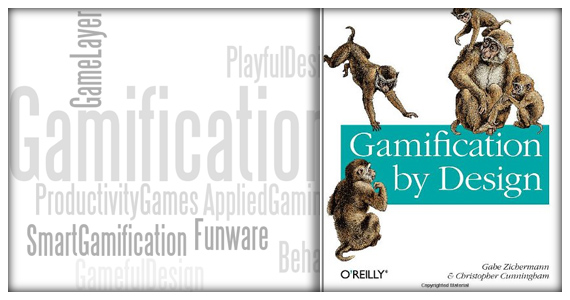
Arrived today another title for my game design shelf. I want to discuss more about gamification and I think this book has a good point of view. Buy here (link).


And below the book description:

"What do Foursquare, Zynga, Nike+, and Groupon have in common? These and many other brands use gamification to deliver a sticky, viral, and engaging experience to their customers. This book provides the design strategy and tactics you need to integrate game mechanics into any kind of consumer-facing website or mobile app. Learn how to use core game concepts, design patterns, and meaningful code samples to a create fun and captivating social environment.

Whether you're an executive, developer, producer, or product specialist, Gamification by Design will show you how game mechanics can help you build customer loyalty
".

Szia!

segunda-feira, 26 de março de 2012

Ludificator

In this moment I'm writing a book named "LUDIFICATOR". It's a quick reference guide for the newbie game designers. I hope someday this content will be translated to english.

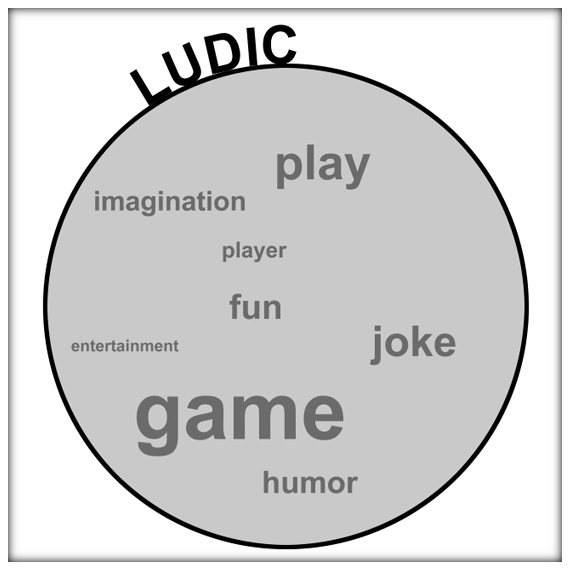
In the third chapter of my book I bring an idea I've discussed in the first post of this blog (link here): the idea of Ludification.

And now I have a good graph to illustrate this concept, as you can see below:

I'm trying to explain that the idea of Lufication is better than Gamification because in my point of view, the Game is inside the Ludic Field.

In my book I tried to demonstrate that it is more adequate to call activities with game mechanics as Ludic Interfaces.

Hang on! The book is coming out soon!

segunda-feira, 17 de outubro de 2011

Free book for download

I´m talking about this excellent book named "Tabletop: Analog Game Design" by Drew Davidson and Greg Costikyan. There are a lot of good texts with great explanations and researches of the universe of analog games.

In this volume, people of diverse backgrounds talk about tabletop games, game culture, and the intersection of games with learning, theater, and other forms. Some have chosen to write about their design process, others about games they admire, others about the culture of tabletop games and their fans. The results are various and individual, but all cast some light on what is a multivarious and fascinating set of game styles.

CLICK HERE FOR DOWNLOAD.