Mostrando postagens com marcador board games. Mostrar todas as postagens

segunda-feira, 5 de fevereiro de 2024

Meta-gaming: transcending the rules in competitive games

In competitive gaming, the concept of "meta-gaming" transcends the basic rules and mechanics of the game itself. It involves understanding and manipulating factors external to the game to gain an advantage or create a deeper gaming experience.


For avid gamers, the term "meta-gaming" is likely familiar. This post delves into the concept of meta-gaming in the context of competitive gaming, defining it as a layer of gameplay that exists beyond the game's core rules and mechanics. Meta-gaming involves understanding and manipulating external factors to enhance the gaming experience or gain an advantage over opponents. League of Legends, Counterstrike, Call of Duty, Marvel Snap, Magic: the Gathering, Pokémon Card Game, Hearthstone, and many other competitive games serve as excellent examples we can use to understand the factors that shape a metagame.

Let’s check some examples of meta-gaming:

• Data analysis: players can leverage statistics related to characters, maps, strategies, and other game elements to identify the most effective approaches.

• Community engagement: players can engage in online communities to discuss strategies, share information, and coordinate actions, fostering a collaborative and social gaming experience.

• Psychological warfare: players can employ techniques such as bluffing, intimidation, or manipulation to influence their opponents' behavior, adding a layer of psychological complexity to the game.

• Cultural creation: players can contribute to the game's cultural landscape by creating memes, stories, and other creative content, expanding the game's universe, and enriching the overall experience.

The meta-game represents a complex and dynamic layer that can enrich the gaming experience in various ways. By understanding and exploring the meta-game, players can enhance their skills, creativity, and engagement with their favorite games. Furthermore, meta-gaming can foster collaboration and social interaction among players, transforming the competitive landscape into a vibrant and dynamic community.

#GoGamers

segunda-feira, 18 de abril de 2022

Using “telepathy” as a game design component

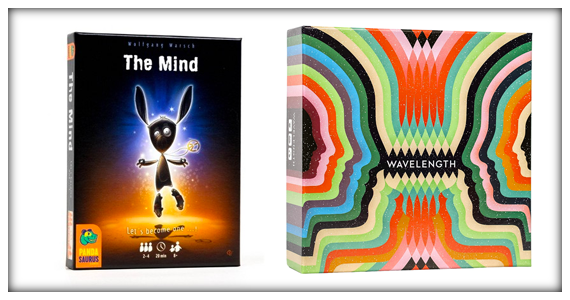
In this post, I’ll talk about two of my favorite tabletop games: THE MIND and WAVELENGTH. The first one was designed by Wolfgang Warsch, the second was created by the same author in partnership with Alex Hague and Justin Vickers. Both titles are very casual and excellent party games - the big feature of both is the telepathic component.


Sounds strange at first moment, but that’s the point of these games. In THE MIND, players have cards with numbers in hand. The gaming objective is to "read” the mind of the other players, organizing cards from the lowest number to the highest. No mimic, no talking allowed, just feeling the energy in the air. It’s a cooperative game that uses only cards with numbers. The video below presents a better notion and a good explaining of the rules:


WAVELENGTH is my latest acquisition to my ludic archive. This one is played in two teams and it’ a competitive game. A player from one team must withdraw a card with two opposites (cold/hot, good actor/bad actor, heavy/light etc.). He looks at the card, rolls a circular device with number marks, checks where the numbers are, closes the device’s screen and shows the card to his team. People must position a pointer more to the left or more to the right trying to enter a telepathic wavelength with the other player. In the video below we can check the simple rules for this game:


In my point of view, these examples are very interesting to understand some game designing processes. Telepathy isn’t a gaming mechanic. In fact it is more like a kind of mutant power. But, with the right set of rules, good components, a bit of creativity and a logical sequence, this can be converted into a true feature for a game.

This is the kind of game that I search today for my collection and research: elegant components with fast rules and a high level of replayability.

#GoGamers

quinta-feira, 3 de fevereiro de 2022

Interview with Martin Wallace

Another excellent video content. An interview with the game designer Martin Wallace; famous for board games like Age of Steam, Brass, Toledo, Automobile, A Study in Emerald, and many others.

This is a master class about analogical game design! Enjoy:


#GoGamers