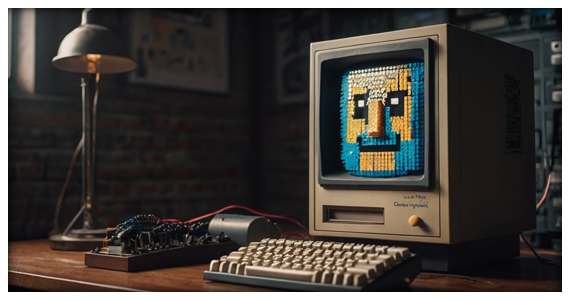
Johan Huizinga, the Dutch historian (1872-1945), is a cornerstone in the study of games, playfulness, and playful interfaces in contemporary times. His seminal work, Homo Ludens, explores the centrality of "playing" in the formation of human culture. This post does not intend to summarize Huizinga's vast argumentation, but rather to highlight some of his theoretical points that still resonate today in the work of game creation.
In the book Homo Ludens published in 1938, Johan Huizinga delineates crucial characteristics for understanding the concept of play and its connections with human culture. The author postulates that play is an intrinsically free and voluntary activity (HUIZINGA, 2001, p. 3), presupposing the conscious acceptance and participation of the players. Furthermore, according to the Dutch historian, play is distinguished from everyday life, constituting a delimited temporal and spatial interval (HUIZINGA, 2001, p. 11). In this environment of fantasy and catharsis, players assume diverse roles, immersed in a universe distinct from the everyday (HUIZINGA, 2001, p. 15).
Play is also structured by rules that establish limits and define who wins and who loses or what are the actions allowed to achieve the objective of the game (HUIZINGA, 2001, p. 12-13). For, for the author, the function of the game, in its highest form, resides in the struggle for something or in the representation of something (HUIZINGA, 2001, p. 16).
Huizinga (2001, p. 65) also introduces the concept of the "magic circle" in Homo Ludens, a space of entertainment where participants transcend everyday concerns to surrender to a separate universe. Within this circle, the laws and customs of ordinary life lose their validity (HUIZINGA, 2001, p. 15-16). The author Ernest Adams (2009, p. 8), even, offers an elucidative representation of the magic circle: in the real world, people kick a ball into a net, but, in the magic circle, someone scores a goal that can enchant the fans of a certain football team.
Complementing Huizinga's thought, we bring to this post the text of Jacques Ehrmann, Homo Ludens Revisited (1968) which retakes and expands the reflections of Johan Huizinga on the nature of the game, offering a rich theoretical framework for the understanding of the ludic phenomenon. Ehrmann (1968, p. 55) argues that the game cannot be defined in isolation, but rather in relation to the culture and reality that surround it. This perspective resonates with the growing importance of narrative in digital games, where the player's experience is shaped by a set of meanings and cultural references.
The centrality of the player as "subject and object of the game" (EHRMANN, 1968, p. 56) highlights the interactive and participatory nature of digital games. The ludic experience in games transcends the mere manipulation of rules and elements, encompassing immersion in fictional worlds, decision-making and the construction of personal narratives.
By observing the thinking of these authors, we conclude that - to understand games in contemporary times - it is fundamental also to look to the past and, above all, to learn to connect the social with the ludic.
#GoGamers
References:
ADAMS, Ernest. Fundamentals of Game Design. New Riders, 2009.
EHRMANN, Jacques, et al. Homo Ludens Revisited. Yale French Studies, 41, p. 31-57, 1968. Available at: https://doi.org/10.2307/2929664.
HUIZINGA, Johan. Homo ludens. São Paulo: Perspectiva, 2001.
sábado, 1 de fevereiro de 2025
quinta-feira, 2 de janeiro de 2025
The significance of artificial intelligence in contemporary game design
In this post I want to briefly discuss the importance of artificial intelligence in the gaming industry. As Togelius (2024) highlights, AI is increasingly prevalent in our daily lives, and games, as prominent elements of the technology industry, are no exception. While the author acknowledges that some recent AI systems exhibit a degree of generalizability, most remain highly specialized: they can only perform a single task within a specific context. For instance, a spell checker cannot perform mathematical calculations, and the world's best chess program cannot play Tetris.
As Togelius (2019) also says, recent advancements in artificial intelligence have significantly enhanced our capabilities, particularly in the realm of game development; as we continue to explore and refine these techniques, their potential applications within games extend far beyond the traditional role of providing skilled opponents. It is imperative that we adapt our game design methodologies to fully leverage the power of advanced AI algorithms and to understand how to use generative AI to help us to create better game designing practices.
Therefore, artificial intelligence has been a constant companion in the evolution of video games, shaping the way we interact with virtual worlds. From the very beginning, AI in games has sought to simulate intelligent behaviors in non-player characters (NPCs), making gaming experiences more immersive and challenging. According to Millington (2009), the early stages of AI in gaming were modest, with simple algorithms determining basic movement patterns and reactions of NPCs. However, as technology advanced, so too did the possibilities. Today, AI in games is capable of generating complex and adaptive behaviors, making NPCs more realistic and challenging. Based on the ideas of Togelius and Millington, it is important to observe the evolution of techniques enabling the use of artificial intelligence in recent decades. Comparing 1962, when MIT students interacted with the Space War game prototype on a static screen with minimal input commands, to 2017 and Echo game, where enemies learn from the player's combat patterns and become increasingly dangerous and unpredictable, highlights this dramatic progression. Since 2017, advances have not stopped and, every year, we are surprised by a new use of AI in games.
In other words, when contemplating the application of AI in gaming, we are not merely considering the development of more efficient adversaries that learn from player behavior or environments that adapt to the specific challenges a player seeks. AI tools can be instrumental in brainstorming processes and in establishing the foundational pillars of game creation. Particularly for small-scale studios and producers with limited resources, access to generative AI tools can serve as a powerful asset to facilitate game development.
#GoGamers
References:
Millington, I., 2009. Artificial Intelligence for Games. Burlington: Morgan Kaufmann Publishers.
Togelius, J., 2019. Playing smart - on games, intelligence, and artificial intelligence. London: The MIT Press.
Togelius, J., 2024. Artificial general intelligence. London: The MIT Press.
As Togelius (2019) also says, recent advancements in artificial intelligence have significantly enhanced our capabilities, particularly in the realm of game development; as we continue to explore and refine these techniques, their potential applications within games extend far beyond the traditional role of providing skilled opponents. It is imperative that we adapt our game design methodologies to fully leverage the power of advanced AI algorithms and to understand how to use generative AI to help us to create better game designing practices.
Therefore, artificial intelligence has been a constant companion in the evolution of video games, shaping the way we interact with virtual worlds. From the very beginning, AI in games has sought to simulate intelligent behaviors in non-player characters (NPCs), making gaming experiences more immersive and challenging. According to Millington (2009), the early stages of AI in gaming were modest, with simple algorithms determining basic movement patterns and reactions of NPCs. However, as technology advanced, so too did the possibilities. Today, AI in games is capable of generating complex and adaptive behaviors, making NPCs more realistic and challenging. Based on the ideas of Togelius and Millington, it is important to observe the evolution of techniques enabling the use of artificial intelligence in recent decades. Comparing 1962, when MIT students interacted with the Space War game prototype on a static screen with minimal input commands, to 2017 and Echo game, where enemies learn from the player's combat patterns and become increasingly dangerous and unpredictable, highlights this dramatic progression. Since 2017, advances have not stopped and, every year, we are surprised by a new use of AI in games.
In other words, when contemplating the application of AI in gaming, we are not merely considering the development of more efficient adversaries that learn from player behavior or environments that adapt to the specific challenges a player seeks. AI tools can be instrumental in brainstorming processes and in establishing the foundational pillars of game creation. Particularly for small-scale studios and producers with limited resources, access to generative AI tools can serve as a powerful asset to facilitate game development.
#GoGamers
References:
Millington, I., 2009. Artificial Intelligence for Games. Burlington: Morgan Kaufmann Publishers.
Togelius, J., 2019. Playing smart - on games, intelligence, and artificial intelligence. London: The MIT Press.
Togelius, J., 2024. Artificial general intelligence. London: The MIT Press.
Marcadores:
AI,
artificial inteligence,
games,
gaming concepts
domingo, 8 de dezembro de 2024
My gaming adventures of 2023: A mix of digital and analog delights
Another year is winding down, and what better way to celebrate than with a list of the games that kept me entertained? Here are my top picks for both digital and analog.
DIGITAL GAMING
The pedestrian
Balatro
Saviorless
Lorelei and the laser eyes
Planet of Lana
Plucky Squire
Neva
Iron Lung
ANALOG GAMING
Cat in the box
Cheez tricks
The green fivura
Mycelium
Tatsu
Zombies and Zilches
#GoGamers
DIGITAL GAMING
The pedestrian
Balatro
Saviorless
Lorelei and the laser eyes
Planet of Lana
Plucky Squire
Neva
Iron Lung
ANALOG GAMING
Cat in the box
Cheez tricks
The green fivura
Mycelium
Tatsu
Zombies and Zilches
#GoGamers
Marcadores:
2024,
boardgames,
list,
top games,
videogames,
vincevader
sábado, 30 de novembro de 2024
3rd International Conference of Video Games Studies
On December 17th, I will be presenting the paper 'Leveraging Generative AI for Enhanced Game Design Document Creation: A Case Study with the Brazilian Video Game Stygma' at the 3rd International Conference of Video Games Studies. The event will be held in Novi Sad, Serbia, although I will be presenting remotely. This marks another significant academic achievement to conclude the year 2024.
Below, you can find the abstract of my paper. The full paper will be published here following the conference:
The advent of generative artificial intelligence (AI) has revolutionized various fields, including game development. This paper explores the potential of generative AI for text and images in the context of creating a Game Design Document (GDD). By leveraging AI's capabilities, game designers can enhance the comprehensiveness, creativity, and efficiency of the GDD creation process. We present a case study analyzing a mobile game currently in production from the Brazilian studio Abysstrakt Games named Stygma - a narrative-driven horror puzzle game, to demonstrate the practical application of generative AI in GDD creation. Utilizing Google’s Gemini (for texts) and Leonardo.Ai (for images), we can observe generated detailed text descriptions of game mechanics, narrative elements, and character profiles, while also creating concept art, character designs, and environmental elements. Our findings highlight the significant benefits of employing generative AI for GDD creation. This approach proved particularly valuable for a short game created by a small studio and the integration of generative AI into game design workflows holds immense potential for the future of game development. By embracing AI's capabilities, game designers can create more comprehensive, creative, and efficient GDDs, ultimately leading to the development of more immersive and engaging gaming experiences – even in small teams.
Keywords: generative AI, game design document, game design, Brazil, mobile game
#GoGamers
Below, you can find the abstract of my paper. The full paper will be published here following the conference:
The advent of generative artificial intelligence (AI) has revolutionized various fields, including game development. This paper explores the potential of generative AI for text and images in the context of creating a Game Design Document (GDD). By leveraging AI's capabilities, game designers can enhance the comprehensiveness, creativity, and efficiency of the GDD creation process. We present a case study analyzing a mobile game currently in production from the Brazilian studio Abysstrakt Games named Stygma - a narrative-driven horror puzzle game, to demonstrate the practical application of generative AI in GDD creation. Utilizing Google’s Gemini (for texts) and Leonardo.Ai (for images), we can observe generated detailed text descriptions of game mechanics, narrative elements, and character profiles, while also creating concept art, character designs, and environmental elements. Our findings highlight the significant benefits of employing generative AI for GDD creation. This approach proved particularly valuable for a short game created by a small studio and the integration of generative AI into game design workflows holds immense potential for the future of game development. By embracing AI's capabilities, game designers can create more comprehensive, creative, and efficient GDDs, ultimately leading to the development of more immersive and engaging gaming experiences – even in small teams.
Keywords: generative AI, game design document, game design, Brazil, mobile game
#GoGamers
Marcadores:
conference,
games,
gaming concepts,
paper,
Serbia,
videogames,
vincevader
domingo, 24 de novembro de 2024
The experience of strangeness in IRON LUNG
Well, those of you who follow my posts here on GAMING CONCEPTZ know that I'm a big fan of indie games, especially those that offer strange features that we'd never see in a AAA or more popular title.
This weekend I played IRON LUNG, a one-hour game created by the Polish game designer David Szymanski. I played it on the Nintendo Switch, but it's available on all gaming platforms.
The game's premise is simple: Earth no longer exists. The only remaining humans are those surviving on spaceships and small mechanical moons. Resources are dwindling, and many people are tasked with searching for new places to colonize. In this context, you've found a planet with some initial conditions suitable for human life, but it's covered by an ocean of blood!
Your mission is to dive into a precarious device called the IRON LUNG, a kind of old-fashioned submarine with very limited resources, and explore pre-mapped regions of the ocean, taking pictures for analysis.
The entire game takes place inside the small chamber of the IRON LUNG. It's a claustrophobic experience with a touch of horror, as you navigate blindly through the ocean and gradually realize that something might be lurking in the depths.
Check out the trailer below:
I loved the game's minimalist style and the low poly graphics. It's a classic horror experience!
#GoGamers
This weekend I played IRON LUNG, a one-hour game created by the Polish game designer David Szymanski. I played it on the Nintendo Switch, but it's available on all gaming platforms.
The game's premise is simple: Earth no longer exists. The only remaining humans are those surviving on spaceships and small mechanical moons. Resources are dwindling, and many people are tasked with searching for new places to colonize. In this context, you've found a planet with some initial conditions suitable for human life, but it's covered by an ocean of blood!
Your mission is to dive into a precarious device called the IRON LUNG, a kind of old-fashioned submarine with very limited resources, and explore pre-mapped regions of the ocean, taking pictures for analysis.
The entire game takes place inside the small chamber of the IRON LUNG. It's a claustrophobic experience with a touch of horror, as you navigate blindly through the ocean and gradually realize that something might be lurking in the depths.
Check out the trailer below:
I loved the game's minimalist style and the low poly graphics. It's a classic horror experience!
#GoGamers
segunda-feira, 4 de novembro de 2024
Game as a product. Game as a service.
The landscape of the video game industry has undergone a significant transformation in recent years, shifting from a product-centric model to a service-oriented one. This evolution has been driven by technological advancements, changing consumer preferences, and the increasing monetization opportunities presented by digital distribution. While both "game as a product" and "game as a service" offer unique experiences, they differ fundamentally in their design, development, and relationship with the player.
Traditionally, games were conceived of as products, complete and finite entities sold to consumers. These games were designed to provide a self-contained experience, with a clear beginning, middle, and end. Once purchased, the game remained relatively static, with few, if any, updates or additional content. The focus was on creating a polished, high-quality experience that could be enjoyed multiple times.
In contrast, "game as a service" models treat games as ongoing platforms that evolve over time. These games are frequently updated with new content, features, and events, keeping players engaged and returning for more. This approach prioritizes player retention and community building, fostering a sense of loyalty and investment among the player base. Moreover, games as a service often incorporate elements of free-to-play mechanics, monetizing through microtransactions, subscriptions, or advertising.
The shift from products to services has several implications for game development. Games as a service require a more iterative and flexible development process, as developers must continually adapt to changing player preferences and market trends. Additionally, the emphasis on community building and player engagement necessitates robust online infrastructure and tools for communication and collaboration.
In conclusion, while both "game as a product" and "game as a service" have their merits, the latter has become increasingly dominant in the modern gaming landscape. By offering ongoing content and fostering strong player communities, games as a service have redefined the way games are developed, distributed, and consumed. As technology continues to advance, it is likely that this trend will only accelerate, leading to even more innovative and engaging gaming experiences.
#GoGamers
Traditionally, games were conceived of as products, complete and finite entities sold to consumers. These games were designed to provide a self-contained experience, with a clear beginning, middle, and end. Once purchased, the game remained relatively static, with few, if any, updates or additional content. The focus was on creating a polished, high-quality experience that could be enjoyed multiple times.
In contrast, "game as a service" models treat games as ongoing platforms that evolve over time. These games are frequently updated with new content, features, and events, keeping players engaged and returning for more. This approach prioritizes player retention and community building, fostering a sense of loyalty and investment among the player base. Moreover, games as a service often incorporate elements of free-to-play mechanics, monetizing through microtransactions, subscriptions, or advertising.
The shift from products to services has several implications for game development. Games as a service require a more iterative and flexible development process, as developers must continually adapt to changing player preferences and market trends. Additionally, the emphasis on community building and player engagement necessitates robust online infrastructure and tools for communication and collaboration.
In conclusion, while both "game as a product" and "game as a service" have their merits, the latter has become increasingly dominant in the modern gaming landscape. By offering ongoing content and fostering strong player communities, games as a service have redefined the way games are developed, distributed, and consumed. As technology continues to advance, it is likely that this trend will only accelerate, leading to even more innovative and engaging gaming experiences.
#GoGamers
Marcadores:
games,
gaming concepts,
market,
product,
service,
trends,
videogames
quarta-feira, 2 de outubro de 2024
On the necessity of uncertainty in games
This week, I revisited one of my favorite game design books: "Uncertainty in Games" by Greg Costikyan. Costikyan is a renowned game designer, having contributed to successful RPGs such as the 1987 Star Wars, TOON, and Paranoia. I decided to reread this title due to an article on UX in gaming that I'm currently developing.
I came across a particularly interesting passage on page 16. Costikyan makes a compelling point: when we're shopping online, operating heavy machinery, or voting in elections, uncertainty and challenge are the last things we desire. In normal circumstances, we prefer simplicity, certainty, and consistency.
Indeed, those of us working in the gaming industry often hear people say they want to make their apps or websites more "game-like" or "gamified"; however, a staggering 74.3% of the time, the term "gamified" is misused 😁. Is this really the case? Costikyan offers a vivid example: imagine transforming Microsoft Word into a game. Let's say that to bold a text, you need to be a level 12 Word user. Before reaching that level, every time you attempt to bold text, the software performs a check against your level. If you fail the check, it applies a random font effect instead of bold. This wouldn't be fun; it would be frustrating.
Essentially, when designing most interactive products (software, apps, systems, etc.), eliminating uncertainty is desirable. When designing games, a degree of uncertainty is essential. This is why people who try to apply some of Jakob Nielsen's human-computer interaction ideas to games often miss the mark. Interface clarity may still be desirable, but eliminating challenges and uncertainties is not. Games should be, in some sense, "difficult to use," or at least, not trivial to win.
To further illustrate humanity's fascination with uncertainty, consider the motivations of those who engage in online gambling.
I came across a particularly interesting passage on page 16. Costikyan makes a compelling point: when we're shopping online, operating heavy machinery, or voting in elections, uncertainty and challenge are the last things we desire. In normal circumstances, we prefer simplicity, certainty, and consistency.
Indeed, those of us working in the gaming industry often hear people say they want to make their apps or websites more "game-like" or "gamified"; however, a staggering 74.3% of the time, the term "gamified" is misused 😁. Is this really the case? Costikyan offers a vivid example: imagine transforming Microsoft Word into a game. Let's say that to bold a text, you need to be a level 12 Word user. Before reaching that level, every time you attempt to bold text, the software performs a check against your level. If you fail the check, it applies a random font effect instead of bold. This wouldn't be fun; it would be frustrating.
Essentially, when designing most interactive products (software, apps, systems, etc.), eliminating uncertainty is desirable. When designing games, a degree of uncertainty is essential. This is why people who try to apply some of Jakob Nielsen's human-computer interaction ideas to games often miss the mark. Interface clarity may still be desirable, but eliminating challenges and uncertainties is not. Games should be, in some sense, "difficult to use," or at least, not trivial to win.
To further illustrate humanity's fascination with uncertainty, consider the motivations of those who engage in online gambling.
#GoGamers
Reference:
COSTIKYAN, Greg. Uncertainty in games. Massachusetts: MIT Press, 2013.
Reference:
COSTIKYAN, Greg. Uncertainty in games. Massachusetts: MIT Press, 2013.
Marcadores:
book,
games,
gaming concepts,
Greg Costikyan,
ideas,
Uncertainty
Assinar:
Postagens (Atom)