Mostrando postagens com marcador videogame. Mostrar todas as postagens

segunda-feira, 6 de outubro de 2025

The clash between diegetic and non-diegetic elements in Hellblade: Senua's Sacrifice

Iacovides et al. (2015, p. 1) distinguish game interface elements into two categories: diegetic elements, which are integrated into the game's fictional reality and can be perceived by the characters, and non-diegetic elements, which are exclusive to the players' perspective. According to these authors, common wisdom in the games industry suggests that excessive use of non-diegetic elements, such as Head-Up Displays (HUDs), can potentially compromise the immersion process. Hellblade: Senua's Sacrifice challenges this convention, offering a remarkable demonstration of how these concepts can be manipulated to deepen the player's experience.


The game stands out for its almost complete elimination of non-diegetic elements. The absence of a health bar, a map, or equipment indicators forces the player to interpret information organically. Senua's health and status are communicated through signals that, while functionally essential for progression, are intrinsically rooted in the narrative. The damage suffered by the character, for instance, is expressed by the progression of a dark "corruption" spreading across her right arm, a visual manifestation of the protagonist's mental illness.


However, one of the game's highlights lies in the fusion between diegesis and the non-diegetic experience. In this regard, we turn to Galloway (2006, pp. 6-7 ), who defines diegesis as the "total world of narrative actions". From this perspective, we can hypothesise that in Hellblade, this world is the subjective and chaotic universe of Senua's mind. Elements that would conventionally be non-diegetic in other games, such as audio cues indicating the path or voices warning of enemy presence, are, in reality, manifestations of the character's psychosis. The player does not receive mere hints; they experience the diegesis of insanity, where the perception of reality is mediated by Senua's suffering. The game's hermeneutics, therefore, cease to be a detached interpretation and become a real-time performance, where the act of playing and interpretation merge into the immersive experience proposed by the system.

The game thus demonstrates that the distinction between diegetic and non-diegetic can be intentionally obscured to create a more cohesive and psychologically immersive gaming experience. By eliminating the HUD and transforming feedback elements into an integral part of the narrative and character perception, Hellblade not only enhances immersion but also establishes a pattern for interface design that seeks to deepen the connection between the player and the fictional universe. Building on this, it is possible to argue that in Senua's Sacrifice, the player potentially experiences a "meta-diegesis." Here, we employ this term to understand a meta-diegetic situation as one that refers to elements which, although intrinsically belonging to the game's diegetic world, communicate directly with the player, subtly subverting the fourth wall. The voices in protagonist Senua's mind represent a compelling application of this idea.

The meta-diegetic nature of Senua's voices can be understood from three analytical perspectives. Firstly, their existence is diegetically grounded: they do not constitute an external narrator or an interface element dissociated from the narrative. On the contrary, they are a central manifestation of the character's psychosis, affecting her perception and interaction with the world. Secondly, they perform an essential non-diegetic function for gameplay. They act as a dynamic feedback system, providing the player with alerts about imminent threats, spatial guidance, and hints for puzzle-solving – functions that, in other games, would be delegated to a HUD or conventional narrator cues.

Finally, the use of voices blurs the boundary between player and character. By merging narrative function with gameplay, the game transcends the mere presentation of information, inviting the player to actively experience Senua's ordeal. The anguish, confusion, and cognitive dissonance caused by the voices become part of the player's immersive experience, and not merely an object of observation. Therefore, the voices in Hellblade constitute a paradigmatic meta-diegetic element, functioning as an interface that deepens immersion rather than breaking it, and offering a sophisticated approach to how narrative elements can be co-opted to optimise the interactive experience.

Meticulous observation of the diegetic, non-diegetic, and meta-diegetic elements in Hellblade: Senua's Sacrifice forms the methodological foundation for an in-depth analysis of the game as an empirical object. By examining the intentional elimination of traditional interface elements (HUD) and the subsequent adoption of a meta-diegetic interface, represented by the voices tormenting the protagonist, it becomes possible to unravel the complexity of its structure.


References

Galloway, A. R. (2006) Gaming: Essays on Algorithmic Culture. Minneapolis: University of Minnesota Press, pp. 6-7.

Iacovides, I., Cox, A. L. and Kennedy, R. (2015) ‘Diegetic and Non-Diegetic Interface Elements in Digital Games: A Review of Prior Work’. In Proceedings of the 2015 Annual Symposium on Computer-Human Interaction in Play. London: ACM, p. 1.

segunda-feira, 2 de junho de 2025

segunda-feira, 15 de abril de 2024

VVVVVV a masterclass in level design

I'm reading the book "Game Designer's Playlist, The: Innovative Games Every Game Designer Needs to Play". During the reading, I had the opportunity to rememeber a great game from the 2010: VVVVVV. VVVVVV is a platforming game with the absence of a jumping mechanic. Instead of jumping, the player can at any time flip the y-direction of gravity, causing the character to fall upward instead of downward. Check the full gameplay below. This is an epic example of how to use game mechanics in a creative way:


#GoGamers

segunda-feira, 15 de janeiro de 2024

50 years of videogame revenue in one image

 An excellent synthesis for this huge market. Happy 2024! Click to enlarge:

#GoGamers

segunda-feira, 13 de fevereiro de 2023

The joy of making combos in games

It’s a fact: one of the most pleasurable feelings one can experience playing games is to combine cards, movements, powers, equipment, making a perfect combo (whether in board/card games or digital ones).


When you can make a combination (or combo) using the right elements to win the game, or just to earn many points on a single turn, you will probably have the feeling McGonigal discusses in her book "The reality is broken" (2011): a fiero feeling. According to the author, fiero is what we feel after we triumph over adversity. You know it when you feel it – and when you see it. That’s because most of us express fiero in the exact same way: we throw our arms over our heads and yell.

Combos are one of the biggest actions that can cause fiero in a player. I myself have experienced this incredible feeling throughout my "ludic life". I have vivid memories of perfect rolls in a D20 in Dungeons & Dragons RPG, great sequences of cards in Magic: The Gathering, the right pressing commands in Mortal Kombat, and many other games.

Recently, I've been experiencing this fiero sensation a lot with the MARVEL SNAP game. Marvel's digital card game won the prize of mobile game of the year in 2022 and it's a good example of this discussion. The game is very fast, with 3 minute matches that use only twelve cards. You must study the best synergy for your deck and play trying to find the best way to reach good combos and destroy the opponent's strategy. In the video below I'm sharing two matches against two different players using a combination of She-Hulk, Absorbing Man and Moongirl cards to multiply the cards' effectiveness.


And you? In what kind of game do you experience the feeling of fiero? What kind of combo makes you happy?

#GoGamers   


Reference:

McGONIGAL, Jane. The reality is broken. London: The Penguin Press, 2011

quarta-feira, 2 de novembro de 2022

ONE LAST GAME: to think games beyond pure entertainment

ONE LAST GAME is an intense 3 Minute game where you play a final game of checkers with a loved One.

Created for the GMTK Game Jam 2020, in ONE LAST GAME you find yourself sitting down at a table in-front of a checkers board with an old and rather unhappy man sat across from you. You proceed to play checkers, but it soon becomes apparent why your companion is so unhappy – there’s a war going on outside. It only takes three minutes to play through One Last Game but it’s a powerful experience that will stay with you for a long time afterward.

Check the full gameplay below:


This game is an experiment that can prove how powerful games can be to cast serious messages and some thinking about contemporary themes. ONE LAST GAME it is an excellent proof of how games can be media and convey content to broad audiences.

#GoGamers

segunda-feira, 13 de junho de 2022

The mysterious (and dark) experience of SILT

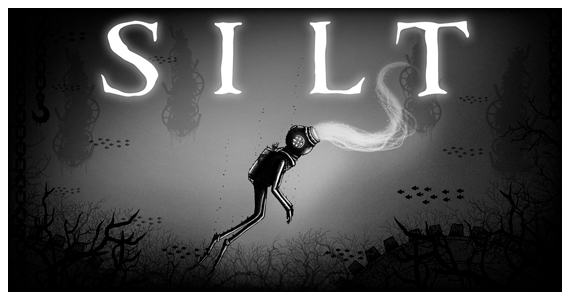
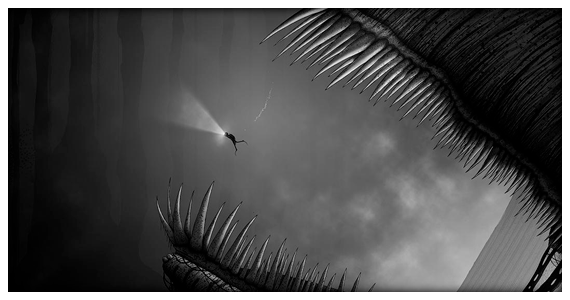
Silt is, undoubtedly, the most interesting game I played this year. It is an exploration game set in a surreal oceanic void where you need to possess aquatic creatures around you with a strange soul energy to solve environmental puzzles and travel deeper into the darkness. The gaming objective is to face giant deep-sea goliaths and harness their power to awaken a long-dormant force at the core of the abyss.


The narrative is full of strangeness in a scenario full of old creatures’ statues, unexplored ruins, and ancient machinery. The monochromatic elements in the stages were created by the artist Mr. Mead (you can check his work here) and it is an awesome feature of the game. The sound design is also another point to highlight: in Silt there is no music, we experience a kind of a soundscape that follows our path into the abyss.


The narrative doesn’t deliver a full explanation about what is happening, who are you, why are you diving in this dark world. But it doesn’t matter. Silt invites us to be co-authors of its narrative. Following some ideas from Dansky (2007, p.5), it is possible to say that “On the most basic level, narrative strings together the events of the game, providing a framework and what can alternately be called a justification, a reason, or an excuse for the gameplay encounters. At its best, the narrative pulls the player forward through the experience, creating the desire to achieve the hero’s goals and, more importantly, see what happens next”. The blend between the mysterious narrative and the beautiful-grotesque scenario is an ideal approach to create immersion through the stages.


Spiral Circus, the studio behind Silt, made a piece of art and an excellent example of how important the gaming indie scene is for contemporary times. I’m finishing the third level and am already sad for the end of the game. One thing is certain: this is a game I’ll play more than one time.

#GoGamers
#GoSilt
#GoSpiralCircus


Reference:

DANSKY, Richard. Introduction to game narrative. BATEMAN, Chris (editor). Game Writing: narrative skills for videogames. Boston: Thomson, 2007.

domingo, 3 de janeiro de 2021

My new videogame is coming soon! "Rapid Eye Movement" is under construction!

Weel, it's a fact: my new horror game is under production and it will be launched in 2021!

Rapid Eye Movement (a partnership between my indie studio Abysstrakt Games and T4 games) — or R.E.M. — is an independent game created for PC and consoles. At the time this post was being written, the game was in the middle of its development process, so it is important to say that some images used here came from the prototype version (the release of the final version is scheduled for the end of 2021).


R.E.M. is a game about dreaming; specifically, about an agonizing nightmare. In a first-person view, the player has exactly three minutes to complete a series of puzzles structured with some clocks scattered in the scenario. Each clock has a unique color and a unique solution; the player must be fast and ingenious to decipher some hints provided by objects displayed in the rooms and then set the right time on the clocks. If the player fails to set the clocks in three minutes, they return to the initial gaming scenario and must start all over again


All the action in R.E.M. takes place inside a strange and distorted house; each room has walls filled with images of old distressing memories. The game design goal that best defines R.E.M. is to cause a feeling of estrangement in the player.

The narrative is mysterious and subject to various interpretations. In the beginning of the game, a monotonic and depressive voice gives some hints about the gaming atmosphere and objective:


Below we reproduce the full text that is the starting point for the dreamlike mood of Rapid Eye Movement:

I have a recurring dream.
In fact, it’s not a dream. It’s a nightmare.
I can say it’s a nightmare because I want to wake up and I can’t.
Everything always starts like this:
I’m in my childhood home.
I know I’m not alone.
However, it is not a human thing that keeps me company.
It’s some kind of shadow.
In dreams (or in nightmares) we don’t question the facts, we just accept them.
I know there are clocks around the house.
I know I have to adjust the clocks correctly.
I know that time is short.
I know that if I don’t succeed, everything will repeat itself. I know. I just know.


Below you can check a little bit from the pre-prototype version (created with Unity):


Wait for news, trailer, demo and more information soon! The game will be presented in HCI conference in July. This year will be full of new games for my portfolio!

#GoGamers

quinta-feira, 4 de abril de 2019

Seven game design mistakes to avoid

One awesome video from the Ask Gamedev channel. Seven important points to pay attention during your game designing process explained in a very fun (and didatic) way.


Great content for classes.

#GoGamers

domingo, 24 de dezembro de 2017

domingo, 9 de julho de 2017

Time, entertainment and the state of flow

When we are experiencing certain activities, time passes differently. Time can go fast when we are playing an interesting game, or slowly if we are watching a boring movie. It varies from person to person, but all of us have different perceptions of the time passing. In this context it’s important to highlight that there’s one chronological time (seconds, minutes, hours etc.) and a subjective time (one that affects every single individual in an unique way).

This is a complex subject to discuss in a short post, so I want to talk about these perceptions related to the gaming field. To help me in this mission, I’ll summon the ideas of the Hungarian psychologist Mihaly Csikszentmihalyi. This researcher (1975) has developed the idea of flow to explain some time lapses we can experience when we are involved in some specific activity. Csikszentmihalyi (1975) explains that “flow” is a state in which a person is fully immersed in an action and highly focused to the extent that one can experience, for example, a loss in the feeling of self-consciousness and time experience. To help us visualize this concept, Csikszentmihalyi created a graph to visually explain the idea of flow:


Source: Tolstoy Therapy

In a synthetic way, we can observe that there are two axes in the graph above: one shows the degree of challenge and other shows skill and confidence levels. When we are experiencing a very stressful situation (like an emergency surgery, one very difficult test or a complex work to be done in a short period) we can enter a zone of panic and anxiety. On the other hand, if we are experiencing a very boring situation (a monotonic class, an annoying movie or a non-challenging game) we can enter a zone of complete boredom. Both extremes lead us to states of attention that - potentially - are harmful to our minds.

But there’s one zone of perfect balance between a stressful situation and a complete boredom state: the flow. When we experience a state of flow, we immerse ourselves in a state of mind that we can even feel the passing of time differently. Have you ever played videogames for three hours but inside of your head, only one hour has passed? This is one situation when a flow happens.

Games are excellent examples to illustrate this discussion. When we like the experience of playing certain games (analogic or digital), we can feel immersed in the state of flow. So, one important component of game design is how to engage players in the game experience so that they potentially access the flow state. There’s no recipe for this, but to test a lot of games with different beta testers that could show some interesting ways to do it.

I want to dedicate this post to all gamers that need to wake up early, but instead say “just ten more minutes” (and play for another hour). =)

#GoGamers


References:

CSIKSZENTMIHALYI, Mihaly. Play and intrinsic rewards. Journal of Humanistic Psychology, Vol 15(3), 1975, 41-63. Online >> click here.

segunda-feira, 5 de junho de 2017

Keeping track of your gaming analysis: a personal approach to organizing notes for classes, meetings and projects

Working with game development requires a lot of references and annotations all the time. Sometimes, we need to find a good example for a game designing class; sometimes we need to reach for a fast good reference to explain some mechanics for a company’s gamification project. Or, maybe, we just need to remember a specific game to write an article or post about it. It helps a lot to have all that stuff at hand to create presentations, classes or academic content. In this post, I’ll share one method that I use to create and organize quick notes about the games I played.

1. Every single game I play is registered on an online document

I call this my “ludic journal”. I have one excel file on Google Docs where I register all played games in chronological order. For analogic games (card games, board games, dice games etc.) I write a note on the same day I played the title. For video games (console, PC, mobile etc.) I register it when I finish the game or when I have sufficiently experienced its core mechanics/narrative. It’s important to write fast to put personal impressions in the document. Usually, I write the game’s name, the day I played, give it a personal rate (one to five asterisks), summarize the game’s narrative/plot (if available), make a list of the core mechanisms and attach a pic. Like in the following example:

Title: CARCASSONNE
Type: board game
Date: December 11th 2007
Rate: * * *
Summary: Players are builders constructing the reign of Carcassonne in France. Using some special characters it’s possible to build roads, churches, castles and farms. When you finish one of these constructions, you earn points. The player with the most points wins the game. The game uses tiles and creates a very interesting design on the table and a random result at the end of each match.
Mechanisms: area control, area influence, tile placement.


2. Add tags to your notes

This second step helps me a lot. After describing the previous elements, I always create a list of tags for the game (a very personal “mix” of words to describe the game in its essence). This is very useful because it’s possible to find a game for a specific use doing a simple search for keywords in the system. Still using Carcassonne as an example, I wrote these tags for the game (tags, in this case, could be single words or even complete phrases):

Tags: Carcassonne; board game; tile game; France; historic context; build; competitive; area control; area influence; tile placement; clever graphic design; metaphor for architecture; useful for history classes; puzzle. 


This method helps me a lot to prepare content in many occasions. Last week I was preparing a class about “casual games”. A fast search in my document revealed 40 occurrences for this kind of game. So, I combine “casual games” with “funny narrative” and the system gave me 7 results. As I said: it’s a personal method. It could probably not be so useful for another person other than me, but this post is to inspire people to create their own methods.

3. I complement my notes using social networks

I like to create personal text registers for the games I have played, but I also like to organize visual references and gaming stuff in other platforms, too. My favorite place to store visual references is Pinterest. Check ot my GAMES, RPG and GAME DESIGN boards. It’s a very practical way to access ideas.

I’m preparing a second post about this subject with other personal methodologies to organize content for work. I hope it helped.

Now, on to your opinion!

#GoGamers

segunda-feira, 26 de dezembro de 2016

Book: Levelling Up - The Cultural Impact of Contemporary Videogames

Wow! I want to share very good news in this last post of the year: in 2015, I presented the paper “Observing Iterative Design on the Game Dominaedro”, that I wrote for the Video Game Cultures & The Future of Entertainment conference (VG7).

Yesterday, I received awesome news from the organizers: all the papers from the conference were compiled in a fantastic book named "Levelling Up: The Cultural Impact of Contemporary Videogames". Edited by Brittany Kuhn and Alexia Bhéreur-Lagounaris, and published by Inter-Disciplinary Press (Oxford) the book is a wide discussion about gaming culture in the contemporary scenario. Check the cool cover below:


CLICK HERE to buy!

Below, you can read the book's synopsis:

"Videogames have come a long way from Super Mario Bros and Pong. After thirty years of technological advancements and academic criticisms, videogames have become a fertile ground for social change and virtual identity creation. Where big game companies like Bioware, Bethesda, and Rockstar Games have begun to include more inclusive narratives, independent game companies are beginning to delve into the field of ‘serious games,’ capitalising on the popularity and prevalence of social networking to inspire and assist non-game-related fields. While all of this is happening, a new subculture has become to dominate social media: that of the fanboy and the Let’s Play YouTube video phenomenon. It is a dynamic time in videogame studies, from the perspective of player, designer and theorist. However, with the advent of virtual reality, the question remains: where will videogames, and subsequently our society, ‘level up’ to next?"

#GoGamers

segunda-feira, 16 de maio de 2016

Missile Command: a game design class in Atari platform

I have played many Atari games in the last weeks. From time to time, I have this nostalgic feeling and I start to remember the good old classics from my childhood. In these “archeological sessions”, I once again played this masterpiece: Missile Command. Well, this one has special importance for me because it’s the very first game that I have ever played in Atari and I can perfectly remember the experience.


Missile Command is a class in game design. Seriously. Everybody that is developing or researching games must, at least one time, play this Atari title. The interface is very simple, but the idea is elegant and instigating: you are in the control of a defense tower and must destroy waves of missiles to protect six cities. The game goes like this: you need to move a crosshair across the screen to launch a counter-missile from the appropriate battery. Before continue the reading, take some minutes to watch the gameplay below and play the game in this online version (click here).


Missile Command
offers some excellent points to discuss the game designing process. Let’s put them in a short list to dwell over:

1) Minimalistic design: with a few pixels is possible to create an instigating gameplay (the game’s cover tells the narrative to the player).

2) Procedural information: stage after stage the missiles become faster. It’s important to understand the patterns of the game to launch the counter-missile in the right place.

3) Elegant game mechanics: point, click and destroy. As simple as that. Missile Command has one interesting and inspiring mechanism. We can reimagine this process in lots of other situations (specially for mobile platforms).

4) Infinite gameplay: Missile Command has no end. You play it until all cities are destroyed. It’s a test for higher rankings, a very common logic in mobile games.

The simplicity from Atari is one point to be highlighted nowadays. In times of extreme complexity in many games, it’s good to look back and find inspiration to create objective, simple and rich new experiences.

#GoGamers

segunda-feira, 23 de novembro de 2015

Gaming characters

Mario, Lara Croft, Kratos, Carmen Sandiego, Sonic, the Angry Birds, Samus, and so many other video game characters are not only popular among video game fans, they are also famous in other entertainment fields beyond gaming universe.


In contemporary times, with so many transmediatic environments, it’s very common to find these characters in comics, animations, movies, toys, and other platforms. Video game characters (as movie/theater/book characters) are the key to establish a dialogue with certain audiences. With technological improvements and new possibilities in gaming platforms (mobile, PC and consoles) we have the chance to develop deeper characters and more immersive situations with them inside the gaming ambient.

About characters from the gaming universe, Miller (2004, p.90) says

. They can attract a large and dedicated group of users, even drawing people to a project that might not ordinarily be interested in interactive entertainment.
. They can increase a project’s perception of being fun or fascinating, even if the underlying purpose of the project is educational or instructional.
. They can give people entry into an unfamiliar or intimidating world and allow them to explore it in a way that feels comfortable and safe.
. They can keep people hooked, willing to spend hours immersed in the character’s life and environment.

However, it’s important to highlight that even with so many advances in the gaming field, we still have excellent games without characters. Mostly games like Tetris, Super Hexagon, Rotatio, and other abstract titles. These examples are perfect to illustrate wide possibilities to create games nowadays. We have multiple audiences with multiple interests, an interesting ecosystem to observe business, narrative and social networks.


Reference:

MILLER, Carolyn Handler. Digital Storytelling: a creator’s guide to interactive entertainment. Burlington: Focal Press, 2004.

quinta-feira, 24 de setembro de 2015

A new book for my ludic library: Death by Video Game

I bought this one in Oxford during the The Videogame Cultures Project: 7th Global Meeting following the recommendation of my hungarian friend Attila.

It's interesting. A little bit morbid for me. Nevertheless, the book has a very good investigative work done by the author. I'm reading the chapter 2 in this moment. I think it will be good to understand new ideas from the gaming universe.


Synopsis:

Whether it's Space Invaders, Candy Crush Saga or Grand Theft Auto, video games draw us in and don't let go. In Taiwan, a spate of deaths at gaming cafes is raising a question: why is it that some of us are playing games beyond the limits of our physical wellbeing? Death by Video Game uncovers the real stories behind our video game obsession. Along the way, award-winning journalist Simon Parkin meets the players and game developers at the frontline of virtual extremism, including the New York surgeon attempting to break the Donkey Kong world record; the Minecraft player three years into an epic journey towards the edge of the game's vast virtual world and the German hacker who risked prison to discover the secrets behind Half-Life 2. Investigating the impact of video games on our lives, Death by Video Game will change the way we think about our virtual playgrounds.

Reference:

PARKIN, Simon. Death by videogame: tales of obsession from the virtual frontline. London: Serpent’s Tail, 2015.

Click here to buy.