Mostrando postagens com marcador graph. Mostrar todas as postagens

segunda-feira, 15 de janeiro de 2024

50 years of videogame revenue in one image

 An excellent synthesis for this huge market. Happy 2024! Click to enlarge:

#GoGamers

terça-feira, 29 de maio de 2018

Thinking about game design

I found this excellent graph in @joebaxterwebb's site. It's a synthetic and great game design lesson to think before gaming development. You can read the complete article HERE.

Sure I'll use in my game designing classes next semester. =)


Thanks, Joe for this great content.

#GoGamers

domingo, 25 de junho de 2017

Gamification loop


Source: Gabe Zichermann's gamification presentation on Slide Share (click here).

#GoGamers

quarta-feira, 22 de fevereiro de 2017

A diagram to explain connections in a board game design process

An excellent diagram to think about the relationships between theme, rules, players and components in board games. The intersections between the different areas point out very interesting ways to ponder about game design questions.


Source: Big Game Theory site

#GoGamers

segunda-feira, 22 de junho de 2015

Player interaction patterns

Today we have an excellent image to understand the complexes video games ecosystems and the multifaceted relationship between players and games (FULLERTON; SWAIN; HOFFMAN, 2008, p.52). We can bring some interesting examples to our discussion: single player vs. game (Super Contra); multiple individual players vs. game (Teenage Mutant Ninja Turtles Arcade); player vs. player (Mortal Kombat - versus mode); unilateral competition (Evolve - one monster vs. four hunters); multilateral competition (multiplayer games like Quake); cooperative play (Pandemic board game); team competition (Soccer).


Reference:

FULLERTON, Tracy; SWAIN, Christopher; HOFFMAN, Steven. Game design workshop: a playcentric approach to creating innovative games. Burlington: Morgan Kaufmann Publishers, 2008.

quarta-feira, 20 de agosto de 2014

quarta-feira, 2 de julho de 2014

T-shirt


"MISSPENT YOUTH" by the Paper Crane.

More information here.

quarta-feira, 20 de novembro de 2013

What is a game?

Researchers of gaming studies field are always discussing this subject. One thing is certain: there’s no absolute answer for this question. A game can be defined in many ways and videogames – specifically – become so complex platforms that is very difficult to reach one single idea about “what is a game”.

The good point is: there are lots of good visions about it. In an excellent presentation made at DiGRA’13 keynote named “The Ambiguity of Game Studies: Observations on the Collective Process of Inventing a New Discipline” the author Janet Murray discusses (among other things) what is a game.

The graph below, from the book “First Person" shows one (of many) interpretations of this subject:


I strongly recommend the complete reading of this presentation. You can find the slides HERE.

quarta-feira, 14 de agosto de 2013

Game design process: a graphic approach

A good graphic reference for game designers from the Jesse Schell's book "The art of game design" (2008, p.463). Check the content below (sorry for the bad resolution):


SCHELL, Jesse. The art of game design. Burlington: Elsevier, 2008.

quarta-feira, 13 de fevereiro de 2013

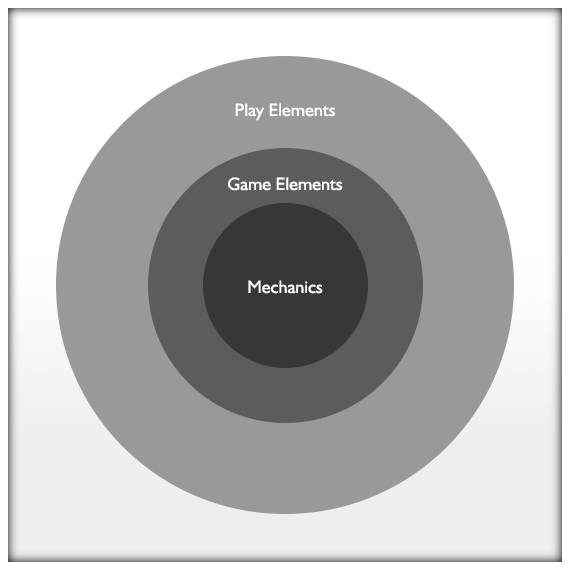
Three levels of player enjoyment

Good visual idea from the author Stewart Woods.


Source: WOODS, Stewart. Eurogames: The Design, Culture and Play of Modern European Board Games. McFarland, 2012.

quinta-feira, 23 de agosto de 2012

sexta-feira, 16 de março de 2012

Games: Tools For Mass Communication

The source is Ogilvy notes: "Art, education, economics, propaganda. Games are arriving at the forefront of media to become an important way to engage entire generations of people. What's different from before? Five billion people are replacing the most common communication device, the simple cell phone, with a full-fledged gaming system in their pocket. There are multiple ways to publish and distribute games over the Internet and to the masses. For many, game creation is becoming a regular activity, as tools become both easier to use and more powerful for people without programming knowledge. This panel will cover unique perspectives on how games are becoming more meaningful forms of expression and a significant tool for communicating ideas".

Click to expand the image below: