Mostrando postagens com marcador game design. Mostrar todas as postagens

segunda-feira, 2 de fevereiro de 2026

The strategic pivot: integrating uncertainty into the game design process

In the realm of functional design, predictability is often viewed as the ultimate benchmark of quality. As Costikyan (2013, p. 16) argues, in real-life situations—such as shopping online, electing a congressman, or utilizing software for work—we demand a lack of ambiguity, noting that "we prefer simplicity, surety, and consistency." In these contexts, uncertainty is a defect to be mitigated, as users prioritize efficiency and the seamless achievement of specific goals. However, the architecture of game design operates on a fundamentally different logic, where the elimination of the unknown would result in a sterile and unengaging experience.

While we strive to minimize unpredictability in quotidian services, within the ludic context, "a degree of uncertainty is essential" (COSTIKYAN, 2013, p. 16). This element serves as the primary catalyst for player immersion and entertainment, transforming a static system into a dynamic challenge. By strategically withholding information or complicating the path to victory, designers create a "possibility space" that compels players to remain cognitively engaged. Without this tension between the player's intent and the outcome's volatility, the experience loses its competitive and emotional resonance.


The implementation of this uncertainty is not monolithic but is derived from various structural layers. Costikyan (2013) analyzes different kinds of games and explains that sometimes uncertainty comes from programmed random results, such as dice rolls or procedural generation; other times, uncertainty lies within opponents and how they perform, particularly in multiplayer environments. Ultimately, uncertainty may result from the player's own abilities in the game, where the execution of a maneuver or the solution to a puzzle remains in doubt until the moment of fruition.

Therefore, the game design process must be viewed as the calibrated management of these various "sources of doubt". A successful designer does not merely create a set of rules, but rather orchestrates a sophisticated balance between agency and chance. By understanding that uncertainty is not a flaw to be corrected, but a strategic tool to be leveraged, developers can craft experiences that transcend simple utility, providing the meaningful struggle that defines the very essence of play.

#GoGamers


Reference:
COSTIKYAN, Greg. Uncertainty in games. Massachusetts: MIT Press, 2013.

segunda-feira, 17 de novembro de 2025

To think about game design process

An excellent point of view about game design by Anton Slashcev. Click here to check the original post.


#GoGamers

segunda-feira, 2 de setembro de 2024

Ergodic literature and game design

The concept of ergodic literature (AARSETH, 1997), which posits that a text is ergodic if it requires nontrivial effort from the reader to traverse, has profound implications for game design. Unlike traditional linear narratives, ergodic texts demand active participation from the consumer. This principle is at the heart of what makes video games so engaging. By requiring players to physically interact with the game world, developers can create experiences that are far more immersive than passive forms of media.

When applied to game design, the concept of ergodicity encourages developers to create games where the player's choices have meaningful consequences. This can be achieved through a variety of mechanics, such as branching narratives, open-world exploration, and player-driven character development. By giving players agency within the game world, developers can foster a stronger sense of investment and emotional connection.

Furthermore, ergodic literature highlights the importance of non-linear storytelling. In traditional narratives, the story unfolds in a predetermined sequence. However, in ergodic texts, the reader's choices can significantly alter the course of the narrative. This non-linear approach allows game designers to create more replayable and customizable experiences. By encouraging players to explore different paths and discover hidden secrets, developers can extend the game's lifespan and keep players engaged for longer periods.


The Witcher 3: Wild Hunt is one of my favorite example of a game that effectively utilizes ergodic principles to enhance the player's experience. This open-world RPG offers a vast and interconnected world that players can explore at their own pace. The game's non-linear narrative allows players to approach quests and side activities in various ways, leading to different outcomes and consequences.

For instance, players can choose to complete quests peacefully through diplomacy or forcefully through combat. These choices can affect the game world in significant ways, such as altering relationships between factions or unlocking new areas. Additionally, the game's crafting system encourages players to gather resources, experiment with different recipes, and create unique items that can be used to customize their gameplay experience.

By giving players a high degree of freedom and agency, The Witcher 3 creates a sense of immersion and ownership over the game world. This ergodic approach fosters a more meaningful and memorable gaming experience.

#GoGamers

Reference:

AARSETH, Espen. Cibertext: Perspectives on Ergodic Literature. The Johns Hopkins University Press: Maryland, 1997.

domingo, 21 de julho de 2024

NEW LEVEL ACHIEVED: I visited the Rovio Studios in Helsinki (Finland)

July was a month full of good stuff! I started my second post-doctoral research in my new academic house, PUC (São Paulo). I’m studying the acquisition of digital goods and social belongings using the game Marvel Snap as the main subject.

For the project’s kickoff, I traveled to Europe to achieve some missions. First, I was talking with some specialists from Paneurópska Vysoká Škola (Bratislava) about my project’s theme. And, to complete this first step, I’ve already interviewed some people for the initial clues of my project.

However, the second mission achieved was an epic win: last week I visited Rovio Studios in Helsinki. Of course you know Rovio, it’s the studio behind the Angry Birds game. My Brazilian friend Cenildon Muradi (a.k.a. Thunder) works in the studio and made this visit possible.


The place is awesome and, of course, ludic. But, I want to highlight that spending one day in Rovio Studios was a master class of game design, business models, and marketing.

I’m returning to Brazil full of ideas to write in my project. I’ll post news very soon here.

Keep following!

#GoGamers

segunda-feira, 3 de junho de 2024

Using AI for game balancing

Since last year, AI has become a more integrated part of my daily life. It's inevitable, and we need to learn how to utilize these technologies effectively, making them our allies in the development process. While I'm not a proponent of using AI to solely generate game ideas, I believe it holds immense potential for game balancing.


Let me share an example from a card game I'm currently developing. It uses trick-taking mechanics with a food theme. The AI I'm working with is Google's Gemini (formerly Bard). Here are some prompts and commands I've found valuable in this project:

1. Gauging AI Knowledge: I began by assessing Gemini's knowledge of trick-taking mechanics. I asked, "How familiar are you with trick-taking mechanics in card games?" The response was positive, and the AI provided several examples within this category.

2. Visualizing Game Mechanics: To help the AI understand the gameplay flow, I shared a sequence of images depicting the activity loop of each round, presented in a comic book format. I phrased it like this: "I'd like to show you a sequence of my game in comic panels. Can you tell me if you understand how a round works?"

3. Asking Specific Questions: Instead of open-ended prompts, I focused on specific goals. For example, regarding card distribution, I asked: "Based on the core mechanics I've shown you, can you suggest a better way to distribute cards in my game to create a balanced experience for players?"

It's important to remember that AI isn't a magic solution. The first suggestion Gemini provided needed some refinement. However, through further prompts and iterations, I arrived at a more viable structure for my game.

Next Steps: The next step is to create a simple prototype for initial beta testing. Player feedback will be crucial for further refinement.

Overall, AI presents a powerful tool that can assist with various aspects of game development, including balancing, code, narrative, and concept ideas.

#GoGamers

sexta-feira, 3 de maio de 2024

Some notes on my recent reading in game design

Last week, I completed reading The Game Designer's Playlist: Innovative Games Every Game Designer Needs to Play by Zack Hiwiller. This book proved to be particularly engaging due to its innovative "playlist" approach. The format functions as a comprehensive compendium, showcasing the rich variety within the field of gaming.


I have extracted two key points from the book that I intend to utilise in a future article. These points are outlined below.

The element that separates games from other art forms is its requirement of audience participation. No game exists in a bubble distinct from its consumption by players. Although more traditional media need to consider the social and cultural framework in which the media will be consumed and interpreted, game authors also have to consider how the consumers will interact with the media itself. Authors generally are not concerned with how quickly the reader reads; musicians don’t generally concern themselves with the specs of the listener’s stereo. But game designers need to consider the actual act of playing as an element of their art. It is in the act of playing itself that games are uniquely qualified to deliver meaning. P.69


As we discussed in the previous chapter, one of the features of games that positions them in a different space from its more static media brethren is that the interactive nature of games opens the doors to new rhetorical and aesthetic effects stemming from that interactivity. A game can be beautiful aesthetically, but it can also be beautiful in how its systems function. P.86

We remain steadfast in our dedication to expanding our knowledge and expertise in this field. 🎮 🎲 😀


Source: HIWILLER, Zack. The game designer’s playlist: innovative games every game designer needs to play. New Jersey: Pearson Education, 2019.

#GoGamers

terça-feira, 5 de setembro de 2023

PHI: a print and play experience

In the game design field, there is a very common practice known as "print and play". As the name suggests, it involves making printable files available online so that people can test your game or enjoy something created specifically for these purposes. In this post, I will introduce a print and play project that my friend Rodrigo Cotellessa and I are currently working on. The project is called PHI; it's an abstract game that I intend to showcase in my online game design portfolio. I will be sharing the prototype files and rules in this post (always click on the images to enlarge them). Once the game's final layout is complete, I will create a new post with the final content. By now, you can download the gaming board by clicking on the image below (it’s an A4 format for an easy black and white print).


Let's talk a little bit about the rules and the creative process.

1.Every game draws inspiration from a place.

The PHI number originates from the Fibonacci series, a sequence in which the sum of consecutive terms equals the next term:
2 + 3 = 5
3 + 5 = 8
5 + 8 = 13
8 + 13 = 21
And so on, to infinity.

However, the PHI number rises from the division of adjacent numbers in this sequence that gradually approach the number 1.618:
3 ÷ 2 = 1.5
5 ÷ 3 = 1.666
8 ÷ 5 = 1.6
13 ÷ 8 = 1.625

The PHI number appears in architecture, nature, geometric design, and many other areas. It is also present in this game. The inspiration and foundation for the mechanics of the PHI game stem from the PHI number.

PHI is a solo abstract game - a themeless game that you play against the board. It's a print and play game created by friends who are passionate about games. Let’s check the rules!

2.Setup

Print the board file available above. Prepare 20 tokens of one color (which will represent your tokens), and 13 tokens of a different color (representing the board pieces). Additionally, you will require five standard D6 dice.


3.Playing

Each round, you must roll the five dice and set aside—at a minimum—one die to create divisions as described on the board. If you roll a 5÷3 combination, place one token on your side; for 8÷5, place two tokens on your side; and if you roll 13÷8, you'll add four tokens. Any unused dice are placed on the side of the board.

Let's consider an example - the rolled dice gave the following result:
The dice separated in this round were 5, 3 and 3:
The remaining two are rerolled:
The die with 5 is set aside, and another one is rolled for the final time:
Here are the generated results, and now it's time to assemble the combinations.
The optimal scenario is an 8÷5, which enables you to place two tokens on the board. However, two opposing pieces will also be placed (due to the two unused dice).
Time for a new round! If the opponent's pieces enter the board before yours, the board wins. The goal is to place all your pieces first. To add a challenge, aim to have the fewest possible opponent pieces entering the board. The fewer, the more epic your victory!

#GoGamers

domingo, 2 de outubro de 2022

Cascadia: a perfect balance between theme and abstraction in a boardgame

Cascadia has just arrived in my collection last week. That’s the "family game" big winner in the last Spiel des Jahres (the well-known "Oscar" of board games).

The board game is a puzzly tile-laying and token-drafting game featuring the habitats and wildlife of the Pacific Northwest. In the game, you take turns building out your own terrain area and populating it with wildlife. You start with three hexagonal habitat tiles (with the five types of habitats in the game), and on a turn you choose a new habitat tile that's paired with a wildlife token, then place that tile next to your other ones and place the wildlife token on an appropriate habitat. (Each tile depicts 1-3 types of wildlife from the five types in the game, and you can place at most one tile on a habitat.) Four tiles are on display, with each tile being paired at random with a wildlife token, so you must make the best of what's available — unless you have a nature token to spend so that you can pick your choice of each item.


I usually say that if you deconstruct a board/card game till the core you will probably find an abstract idea made up with geometric shapes, numbers, patterns, colors, etc. Some of these analogic games use this abstract idea to give life to whole games, as we can see in GIPF Project titles, as an example. On the other hand, we have games created with specific themes, narratives, ambiences, etc. Games that put a thematic skin on abstract mechanics.

Cascadia is a great example of how a game can establish a perfect balance between these two points. The abstract component (the core of the game´s mechanics) is easily visualized in the gaming score, in the tiles and how the colorful tokens match with them. But Randy Flynn, the game designer behind Cascadia, made an excellent thematic insertion in the abstract field of the game.

Obviously, you can change the "nature" theme from the game and place "aliens", "ninjas”, or "zombies" in the same place, but the result in terms of gaming experience will not be the same. Why? Because Flynn looked to the abstract mechanics and abstract components and found a way to describe, very close to reality, the behavior of the animals and the ecosystem around them.

Cascadia is an excellent example of how some themes connect perfectly with some mechanics. It is a practical example of the definition of "game design" proposed by Brathwaite and Schreiber (2009, p.2) who define the term as the process of creating goals that players feel motivated to achieve and rules that they follow. A process where they are making significant decisions to achieve purposes, all the time. In other words: game design is an experience architecture process; it is the materialization of an idea in the form of a game.

#GoGamers


Reference:

BRATHWAITE, Brenda;SCHREIBER, Ian. CHALLENGES FOR GAME DESIGNERS: non-digital exercises for video game designers. USA: Cengage, 2009.

terça-feira, 10 de maio de 2022

STENA!

Prepare your smartphone! Today is the grand premiere of my new game: STENA was launched in the Google Play (and soon will be launched in App Store)! Check the trailer below and download for free, now!


I discussed a little bit of the game’s gaming design process (errors, prototyping, wireframes etc.) in this post. But, in this one, I want to talk about the creative process, or, in other words: where did the idea for this game come from?

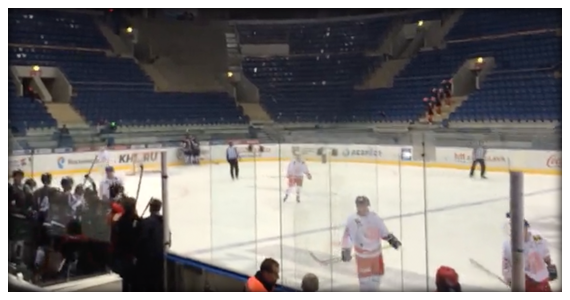
The year was 2016. I was living in Bratislava (capital of Slovakia) and writing my doctorate thesis in a partnership with Paneurópska Vysoká Škola. In my free time, one of my favorite things was to walk and visit pubs in the old town (or “Staré Mesto” in Slovak language). One day I was in my favorite pub, Zbrojnoš, watching an ice hockey game on TV. One important detail: I’m not a sports fan, but ice hockey is a national passion in Slovakia, so I decided to understand the game better (I even went to Ondrej Nepela Arena to watch the Králi team from my university play).


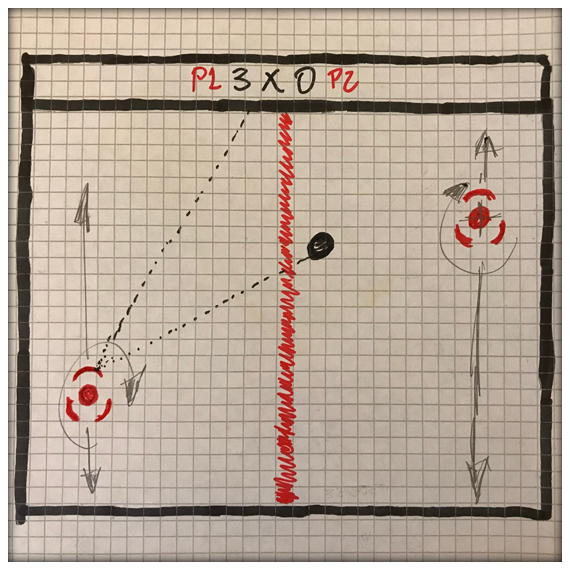
Trying to discover the mysteries behind ice hockey, two things caught my attention: how difficult it is to put the puck inside the goal and the possibility to skate freely in the whole space (including behind the goal). So, I had an idea: a PONG game with ice hockey rules. Well, that was the starting idea, but the final product is very different. One day I started to sketch some wireframes and created this very first version: a game for two players with rotating paddles where the goal is to hit the center of the opponent's engine.


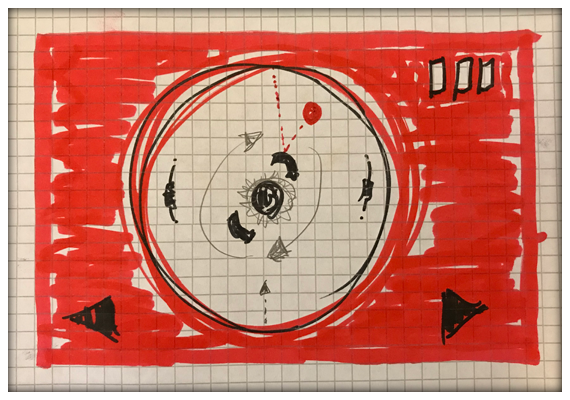
Well, too complicated. I started to simplify the idea. I started to think about one-player experience, mobile media experience, fast games, and minimal design. So, the rounded space appeared in front of me. I drew a circular arena with different kinds of risks and obstacles. The final touch: the game must be punitive and hard in a way that only games like DARK SOULS can be. =)


I showed more detailed wireframes to my friend Jakub and asked him: “is there any Slovak word that represents, at the same time, the idea of wall, protection and shield?”. He answered: “Yes! STENA is the word”.

So, this is a detail from the creative process of my new game! Always pay attention to small details around you. Always keep a notebook with you. Game ideas are always around, ready to be materialized.

#GoGamers

segunda-feira, 18 de abril de 2022

Using “telepathy” as a game design component

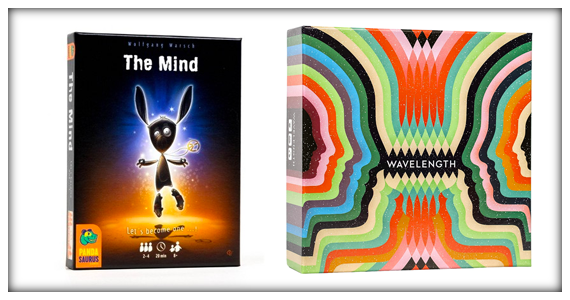
In this post, I’ll talk about two of my favorite tabletop games: THE MIND and WAVELENGTH. The first one was designed by Wolfgang Warsch, the second was created by the same author in partnership with Alex Hague and Justin Vickers. Both titles are very casual and excellent party games - the big feature of both is the telepathic component.


Sounds strange at first moment, but that’s the point of these games. In THE MIND, players have cards with numbers in hand. The gaming objective is to "read” the mind of the other players, organizing cards from the lowest number to the highest. No mimic, no talking allowed, just feeling the energy in the air. It’s a cooperative game that uses only cards with numbers. The video below presents a better notion and a good explaining of the rules:


WAVELENGTH is my latest acquisition to my ludic archive. This one is played in two teams and it’ a competitive game. A player from one team must withdraw a card with two opposites (cold/hot, good actor/bad actor, heavy/light etc.). He looks at the card, rolls a circular device with number marks, checks where the numbers are, closes the device’s screen and shows the card to his team. People must position a pointer more to the left or more to the right trying to enter a telepathic wavelength with the other player. In the video below we can check the simple rules for this game:


In my point of view, these examples are very interesting to understand some game designing processes. Telepathy isn’t a gaming mechanic. In fact it is more like a kind of mutant power. But, with the right set of rules, good components, a bit of creativity and a logical sequence, this can be converted into a true feature for a game.

This is the kind of game that I search today for my collection and research: elegant components with fast rules and a high level of replayability.

#GoGamers

quinta-feira, 3 de fevereiro de 2022

Interview with Martin Wallace

Another excellent video content. An interview with the game designer Martin Wallace; famous for board games like Age of Steam, Brass, Toledo, Automobile, A Study in Emerald, and many others.

This is a master class about analogical game design! Enjoy:


#GoGamers

segunda-feira, 4 de outubro de 2021

Game design process by Riot Games

An awesome (and didactic) content about how to strategically think game designing process. One crew from Riot Games explains in details how to start with a simple idea and how to reach an interesting ludic project. Check the video below:


#GoGamers

terça-feira, 1 de junho de 2021

"Horror Ludens: Using Fear to Construct Meaning in Video Games" - my article for HCI International 2021

The HCI International 2021 (USA) conference will take place in July (online). I will present the article "Horror Ludens: Using Fear to Construct Meaning in Video Games". You can read the article by clicking here and you can play the game by clicking here!


Below, the article's summary:

Abstract. In this article, we discuss how fear can be a powerful element to construct meaning in some specific video games. Titles like Phantaruk, Alan Wake, Here they lie, and many others help us to find some answers in this scenario, but herein we intend to focus our attention on the game Rapid Eye Movement (PC, 2020-2021). Created by an independent Brazilian studio named Abysstrakt Games, and scheduled to be launched in late 2021, the game sets its action in a dreamlike ambient where the player has the role of a person inside a nightmare, looking for clues to set the time on different clocks, trying to wake up. As a methodological process to understand how it is possible to create meaning using fear in video games, we have employed a formal analysis of gameplay that “is based on studying a game independently of context, that is, without regarding which specific people are playing a specific instance of the game”. We have observed a group of players of Rapid Eye Movement in order to study how moments of horror and terror create an atmosphere of fear and, consequently, the meaning of the gaming experience. In this work, we present these impressions as a qualitative research, with the objective of identifying the main points inside the fearful experience of playing Rapid Eye Movement, in order to comprehend how terror, horror, anxiety and despair could be used to support the game design process.

Keywords: Horror, Video Game, Indie Game.

#GoGamers

segunda-feira, 1 de fevereiro de 2021

Eight solo game developer mistakes to avoid

Another excellent video with brilliant ideas from Ask Gamedev YouTube channel.


Eight Solo Game Developer Mistakes to Avoid:

1.Lack of feedback
2.Lack of demo build
3.No source control
4.Coding standards
5.Custom engine
6.Bad art
7.No test plan
8.Not finishing

#GoGamers

domingo, 3 de janeiro de 2021

My new videogame is coming soon! "Rapid Eye Movement" is under construction!

Weel, it's a fact: my new horror game is under production and it will be launched in 2021!

Rapid Eye Movement (a partnership between my indie studio Abysstrakt Games and T4 games) — or R.E.M. — is an independent game created for PC and consoles. At the time this post was being written, the game was in the middle of its development process, so it is important to say that some images used here came from the prototype version (the release of the final version is scheduled for the end of 2021).


R.E.M. is a game about dreaming; specifically, about an agonizing nightmare. In a first-person view, the player has exactly three minutes to complete a series of puzzles structured with some clocks scattered in the scenario. Each clock has a unique color and a unique solution; the player must be fast and ingenious to decipher some hints provided by objects displayed in the rooms and then set the right time on the clocks. If the player fails to set the clocks in three minutes, they return to the initial gaming scenario and must start all over again


All the action in R.E.M. takes place inside a strange and distorted house; each room has walls filled with images of old distressing memories. The game design goal that best defines R.E.M. is to cause a feeling of estrangement in the player.

The narrative is mysterious and subject to various interpretations. In the beginning of the game, a monotonic and depressive voice gives some hints about the gaming atmosphere and objective:


Below we reproduce the full text that is the starting point for the dreamlike mood of Rapid Eye Movement:

I have a recurring dream.
In fact, it’s not a dream. It’s a nightmare.
I can say it’s a nightmare because I want to wake up and I can’t.
Everything always starts like this:
I’m in my childhood home.
I know I’m not alone.
However, it is not a human thing that keeps me company.
It’s some kind of shadow.
In dreams (or in nightmares) we don’t question the facts, we just accept them.
I know there are clocks around the house.
I know I have to adjust the clocks correctly.
I know that time is short.
I know that if I don’t succeed, everything will repeat itself. I know. I just know.


Below you can check a little bit from the pre-prototype version (created with Unity):


Wait for news, trailer, demo and more information soon! The game will be presented in HCI conference in July. This year will be full of new games for my portfolio!

#GoGamers

quinta-feira, 1 de outubro de 2020

Game Design Document: an idea for a basic model

If you want to work with game design, you've probably heard about a Game Design Document (or a GDD). If you already work with game design, you've probably developed many documents of this kind. Anyway, in this post I want to introduce a very simple template to help beginners out in the exercise of putting a gaming idea on paper.

First point to discuss: think small in your first projects. It’s not a bad thing to think like this in the gaming area. Triple A games usually have GDD documents with hundreds of pages, thousands of details etc. Focus on creating a hyper-casual game; try to establish one core mechanic, a simple narrative, and a minimalist aesthetic. Try to create the concept and main ideas in a sketchbook (yes, I suggest using paper! Works a lot for me) and, then, organize these thoughts in an objective structure. I like to use the following model of GDD for simple games:


I have used this model a lot in my classes and you can download it by clicking here. If you want to share the results or just discuss some ideas, send me an e-mail! vincevader@gmail.com 

 #GoGamers


sábado, 3 de agosto de 2019

Article: The Strategic Use of Smartphone Features to Create a Gaming Experience of Mystery: The Mind Alone Case

As I said in the last post, in July I attended the Human Computer Interface Conference at Orlando (Florida). Today I want to share my article (click here) and invite everybody to buy the conference's book with all the articles related to the subject "games" (click here).


#GoGamers

sexta-feira, 5 de julho de 2019

HCI International 2019

At the end of next July, the HCI (Human Computer Interface) international conference will take place in Orlando, FL.

This conference aims to discuss the intersections between culture, technology, behavior and society. The “games” subject will, surely, be one of the main discussions in the event, and I’ll be in HCI presenting my paper "The Strategic Use of Smartphone Features to Create a Gaming Experience of Mystery: The Mind Alone Case".


Below, you can check the abstract of my article that will be published in a book, which will be sold at the conference:

In the present work, we discuss the creative process behind the Brazilian mobile game Mind Alone (Sioux Games, 2018). We start our discussion with a brief overview of mobile media and the Brazilian gaming market, in order to clarify why mobile games are a rich field to explore in this country, and to assess some aspects of the Brazilian gamer audience. After this introduction, we proceed to expound the main features of the game Mind Alone, aiming to finally put forward some ideas about strategic thinking in game design, game writing, and puzzle design, emphasizing the need of multidisciplinary thinking. This article recounts the whole creative process behind Mind Alone, highlighting some main phases: (1) brainstorming, including interviews with the production team at the Sioux company; (2) documentation, analyzing the “high concept template”; (3) production, elucidating the interface between art and coding (and how to merge smartphone features to create the game experience); and (4) beta-testing, comprising guidelines for a qualitative session. With this work, we intend to depict the full development of a mobile game, from brainstorming to publishing and documentation. It is important to highlight, in this context, that the author of this article was the game designer responsible for Mind Alone’s mechanics and narrative.

After the conference, in August, I intend to share the PDF file with my complete article and the presentation as well.

For this trip I had the sponsorship of ON e-stadium (a Brazilian eSports arena from São Paulo) and ESPM (the college I work at) IT course.

Wait for news, pics and good content next month.

#GoGamers